
New: booking links. Let people book you in their own time zone.
Current Local Time in 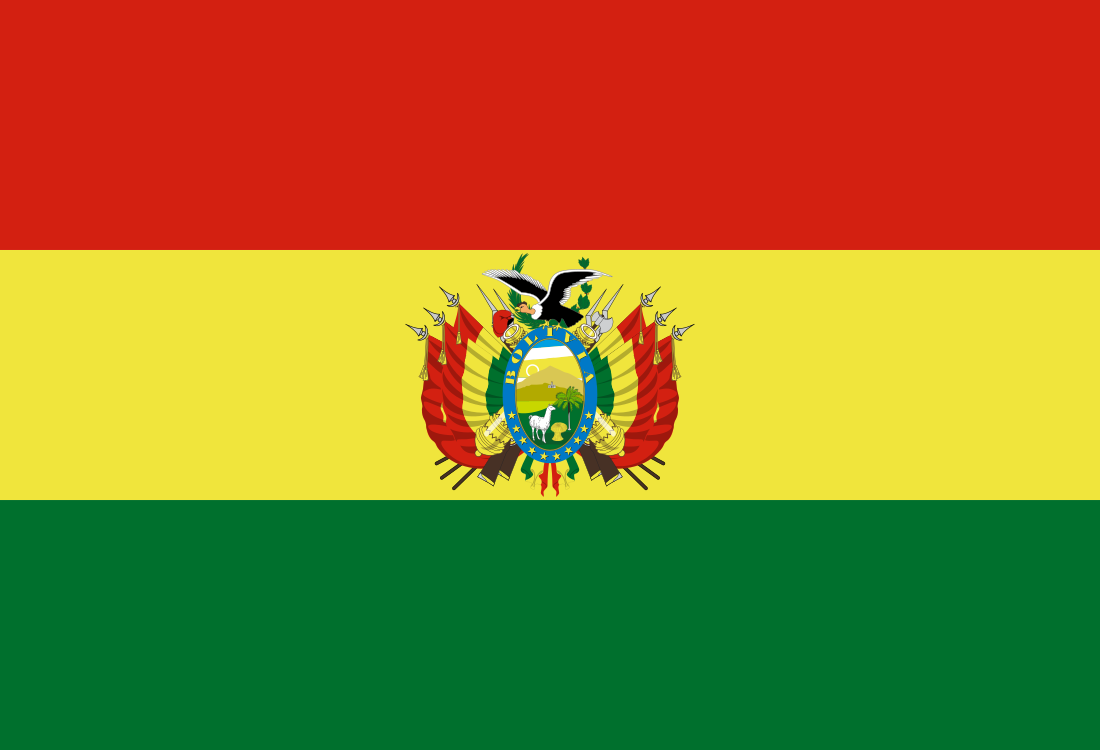 Bolivia
Find best meeting timeLa Paz is already loaded in the meeting planner.
12hr|24hr

10:49:11am
Sunday, October 25, 2026
La Paz • America/La_Paz
Location
Interactive map loads after hydration. Capital coordinates: -16.50°N, -68.15°E.
Compare Times Live
The interactive time comparison grid loads in the live app. After the page hydrates you can add cities, drag rows, and share custom meeting windows.
SALAR DE UYUNI SALT FLATSWORLD'S HIGHEST NAVIGABLE LAKETRADITIONAL ANDES MUSICHOME OF THE CHACOLITIWANAKU ARCHAEOLOGICAL SITEPOTATO DIVERSITY CROP CENTERWOMEN WEAR POLLERASCELEBRATION OF DIABLADA DANCEBOLIVIAN JUNGLE ECOLOGYAYMARÁ AND QUECHUA LANGUAGESCITY OF POTOSÍ SILVER MINESCOCA LEAF CULTURAL SIGNIFICANCEDIVERSE ECOLOGICAL ZONESBOLIVIAN CHACO REGIONHOME TO THE ANDEAN CONDORSALAR DE UYUNI SALT FLATSWORLD'S HIGHEST NAVIGABLE LAKETRADITIONAL ANDES MUSICHOME OF THE CHACOLITIWANAKU ARCHAEOLOGICAL SITEPOTATO DIVERSITY CROP CENTERWOMEN WEAR POLLERASCELEBRATION OF DIABLADA DANCEBOLIVIAN JUNGLE ECOLOGYAYMARÁ AND QUECHUA LANGUAGESCITY OF POTOSÍ SILVER MINESCOCA LEAF CULTURAL SIGNIFICANCEDIVERSE ECOLOGICAL ZONESBOLIVIAN CHACO REGIONHOME TO THE ANDEAN CONDORSALAR DE UYUNI SALT FLATSWORLD'S HIGHEST NAVIGABLE LAKETRADITIONAL ANDES MUSICHOME OF THE CHACOLITIWANAKU ARCHAEOLOGICAL SITEPOTATO DIVERSITY CROP CENTERWOMEN WEAR POLLERASCELEBRATION OF DIABLADA DANCEBOLIVIAN JUNGLE ECOLOGYAYMARÁ AND QUECHUA LANGUAGESCITY OF POTOSÍ SILVER MINESCOCA LEAF CULTURAL SIGNIFICANCEDIVERSE ECOLOGICAL ZONESBOLIVIAN CHACO REGIONHOME TO THE ANDEAN CONDOR
Country Information
Capital
La PazPopulation
6,326,915
Area
1,098,581 km²
Largest City
La PazDaylight Saving Time (DST)
Not Observed
ISO Code
BO / BOL
Time Zones
1 zone
Languages
Spanish, Quechua, Aymara
Currency
Bolivian Boliviano (Bs.) - Bs.100
Coordinates
Decimal:-16.5000, -68.1500
DMS:16°30′00″S, 68°09′00″W
Elevation
Highest:6,542 m
Lowest:90 m
Average:3,316 m
International Dialing Code
+591
Time Zones
• America/La_Paz| GMT-4 (UTC-4)
Geographic Extremes
About Bolivia
•Bolivia is home to the largest salt flat in the world, Salar de Uyuni, which spans over 10,000 square kilometers.
•The country has a rich indigenous heritage, with over 30 different ethnic groups, including the Aymara and Quechua peoples.
•Bolivia gained its independence from Spanish rule on August 6, 1825.
•The traditional Andean festival of Inti Raymi celebrates the sun god and reflects the deep-rooted indigenous cultures in Bolivia.
•Lake Titicaca, located on the border between Bolivia and Peru, is considered the highest navigable lake in the world.
•Bolivia is known for its diverse ecosystems, ranging from the Andes mountains to the Amazon rainforest.
•The country has made significant strides in social movements, particularly in advancing the rights of indigenous peoples.
•Bolivia's economy relies heavily on natural gas and mineral exports, which significantly contribute to its GDP.
•The country recognizes 37 official languages, with Spanish, Quechua, Aymara, and Guarani being the most widely spoken.
•Tiwanaku is an important archaeological site in Bolivia, known for its monumental structures and significance to pre-Columbian cultures.
•Bolivia hosts the world's largest butterfly sanctuary, known as the 'Mariposario,' located in the tropical region of the country.
•The Bolivian national dish, Salteña, is a popular pastry filled with meat, potatoes, and spices, reflecting the diverse culinary traditions.
•In 2006, Evo Morales became the first indigenous president of Bolivia, symbolizing a major shift in the country's political landscape.
•The Wiphala flag, a colorful checkered flag representing indigenous peoples, is an important national symbol in Bolivia.
Cities in Bolivia
Showing 10 cities (top 50 by population + business hubs). Click any city to view detailed time information.
Cities by Population
Popular Cities in Bolivia
Related Pages
findtime.io
Popular Cities
v4.6-28-g4f8901461-6476-4f89014
