
New: booking links. Let people book you in their own time zone.
Current Local Time in 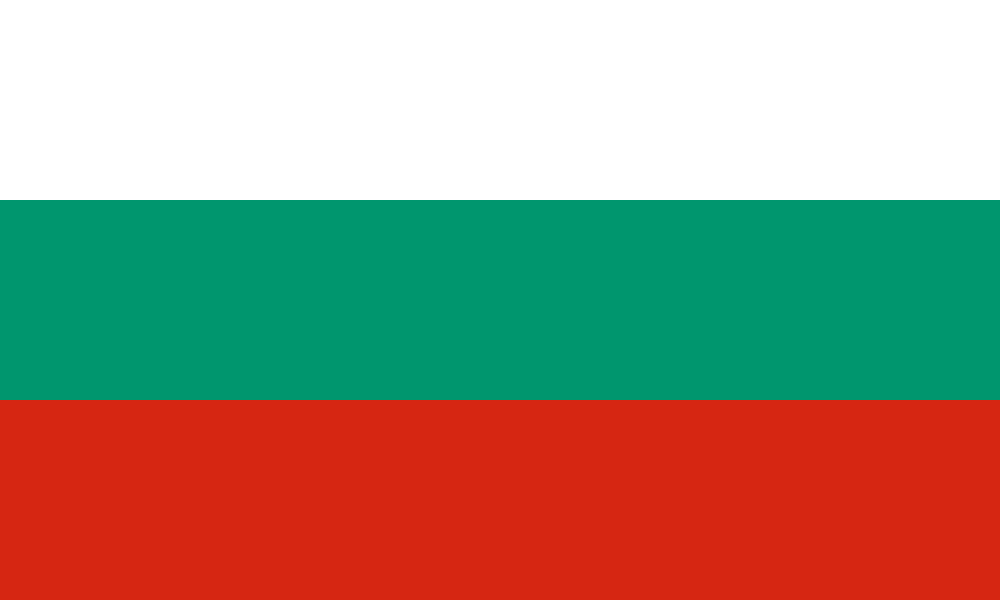 Bulgaria
Find best meeting timeSofia is already loaded in the meeting planner.
12hr|24hr

06:57:42am
Friday, October 23, 2026
Sofia • Europe/Sofia
Location
Interactive map loads after hydration. Capital coordinates: 42.70°N, 23.32°E.
Compare Times Live
The interactive time comparison grid loads in the live app. After the page hydrates you can add cities, drag rows, and share custom meeting windows.
ORIGIN OF ROSE OILTHRACIAN GOLD TREASURESUNESCO-WORLD HERITAGE SITESKOPRIVSHTITSA FOLK FESTIVALBABA MARTA TRADITIONONE OF OLDEST WRITTEN LANGUAGESRILA MONASTERYBULGARIAN YOGURTNESTINARSTVO FIRE DANCINGSANDY BEACHES OF BLACK SEABULGARIA'S FIRST SLAVIC ALPHABETBREAD AND SALT TRADITIONPIRIN NATIONAL PARKSAINT JOHN OF RILABULGARIAN FOLK MUSIC INSTRUMENTSORIGIN OF ROSE OILTHRACIAN GOLD TREASURESUNESCO-WORLD HERITAGE SITESKOPRIVSHTITSA FOLK FESTIVALBABA MARTA TRADITIONONE OF OLDEST WRITTEN LANGUAGESRILA MONASTERYBULGARIAN YOGURTNESTINARSTVO FIRE DANCINGSANDY BEACHES OF BLACK SEABULGARIA'S FIRST SLAVIC ALPHABETBREAD AND SALT TRADITIONPIRIN NATIONAL PARKSAINT JOHN OF RILABULGARIAN FOLK MUSIC INSTRUMENTSORIGIN OF ROSE OILTHRACIAN GOLD TREASURESUNESCO-WORLD HERITAGE SITESKOPRIVSHTITSA FOLK FESTIVALBABA MARTA TRADITIONONE OF OLDEST WRITTEN LANGUAGESRILA MONASTERYBULGARIAN YOGURTNESTINARSTVO FIRE DANCINGSANDY BEACHES OF BLACK SEABULGARIA'S FIRST SLAVIC ALPHABETBREAD AND SALT TRADITIONPIRIN NATIONAL PARKSAINT JOHN OF RILABULGARIAN FOLK MUSIC INSTRUMENTS
Country Information
Capital
SofiaPopulation
3,175,359
Area
110,879 km²
Largest City
SofiaDaylight Saving Time (DST)
Observed
ISO Code
BG / BGR
Time Zones
1 zone
Languages
Bulgarian
Currency
Bulgarian Lev (лв) - лв100
Coordinates
Decimal:42.6975, 23.3241
DMS:42°41′51″N, 23°19′27″E
Elevation
Highest:2,925 m
Lowest:0 m
Average:1,463 m
International Dialing Code
+359
Time Zones
• Europe/Sofia| EEST (UTC+3)
About Bulgaria
•Bulgaria is known for its rich history, dating back to the establishment of the First Bulgarian Empire in 681 AD.
•The Cyrillic alphabet was developed in the First Bulgarian Empire and is now used by many Slavic languages.
•Bulgaria is famous for its traditional folk music and dances, which often feature intricate rhythms and vibrant costumes.
•The country is home to the Rila Monastery, a UNESCO World Heritage site, which is a significant cultural and historical landmark.
•Bulgaria celebrated the creation of its own alphabet and literature during the Golden Age of the Bulgarian Culture in the 9th and 10th centuries.
•Rose oil is one of Bulgaria's major exports, and the country is known as the 'Land of Roses' due to its extensive rose fields.
•Bulgaria has a diverse geography that includes mountains, plains, and a coastline along the Black Sea.
•The Thracian Tomb of Kazanlak, another UNESCO World Heritage site, showcases the artistic achievements of the ancient Thracian civilization.
•Bulgaria has a tradition of celebrating the festival of Baba Marta, which marks the arrival of spring and involves the exchange of red and white yarn called 'martenitsi'.
•The country is home to the oldest gold treasure in the world, found in the Varna Necropolis, dating back to 4,500 BC.
•Bulgarian yogurt is renowned for its unique taste and health benefits, attributed to the specific strains of bacteria used in its production.
•The country has a significant Orthodox Christian heritage, with the Bulgarian Orthodox Church being one of the world's oldest.
•Bulgaria is known for its beautiful natural landscapes, including the stunning Seven Rila Lakes and the Pirin National Park.
•The traditional Bulgarian dish 'banitsa' is made with layers of filo pastry and filled with cheese, eggs, and yogurt, and is often enjoyed during celebrations.
Cities in Bulgaria
Showing 10 cities (top 50 by population + business hubs). Click any city to view detailed time information.
Cities by Population
Popular Cities in Bulgaria
Related Pages
findtime.io
Popular Cities
v4.5-1060-gae3c34c65-6429-ae3c34c
