
New: booking links. Let people book you in their own time zone.
Current Local Time in 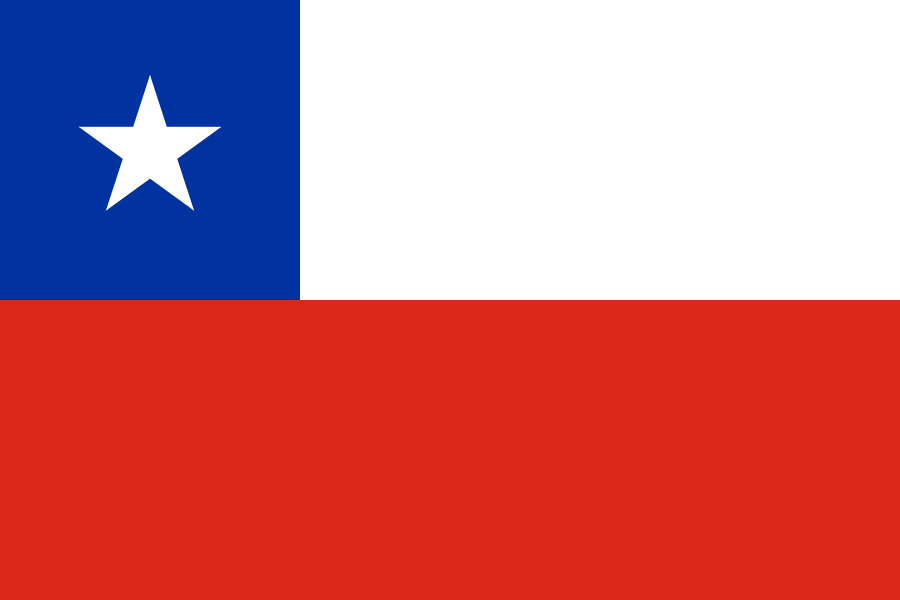 Chile
Chile
Find best meeting timeSantiago is already loaded in the meeting planner.
12hr|24hr

11:49:17am
Sunday, October 25, 2026
Santiago • America/Santiago
Location
Interactive map loads after hydration. Capital coordinates: -33.46°N, -70.65°E.
Compare Times Live
The interactive time comparison grid loads in the live app. After the page hydrates you can add cities, drag rows, and share custom meeting windows.
HOME OF THE ATACAMA DESERTISLA DE PASCUA'S MOAI STATUESFAMOUS FOR CARMENÈRE WINEHISTORICAL SITE OF VALPARAISOANDES MOUNTAINS DRAINAGE SYSTEMCHILE'S VAST COASTLINEPABLO NERUDA'S POETIC LEGACYTERREMOTOS SHAPED HISTORYCHILEAN FLAG HAS UNIQUE SYMBOLISMFESTIVAL DE LA TIRANA CELEBRATIONNATIONAL PARK TORRES DEL PAINECHILE'S LONGEST COUNTRY IN THE WORLDINVENTION OF PISCO COCKTAILCUECA DANCE AS NATIONAL DANCEHOME TO THE PENGUINS OF PUERTO MONTTHOME OF THE ATACAMA DESERTISLA DE PASCUA'S MOAI STATUESFAMOUS FOR CARMENÈRE WINEHISTORICAL SITE OF VALPARAISOANDES MOUNTAINS DRAINAGE SYSTEMCHILE'S VAST COASTLINEPABLO NERUDA'S POETIC LEGACYTERREMOTOS SHAPED HISTORYCHILEAN FLAG HAS UNIQUE SYMBOLISMFESTIVAL DE LA TIRANA CELEBRATIONNATIONAL PARK TORRES DEL PAINECHILE'S LONGEST COUNTRY IN THE WORLDINVENTION OF PISCO COCKTAILCUECA DANCE AS NATIONAL DANCEHOME TO THE PENGUINS OF PUERTO MONTTHOME OF THE ATACAMA DESERTISLA DE PASCUA'S MOAI STATUESFAMOUS FOR CARMENÈRE WINEHISTORICAL SITE OF VALPARAISOANDES MOUNTAINS DRAINAGE SYSTEMCHILE'S VAST COASTLINEPABLO NERUDA'S POETIC LEGACYTERREMOTOS SHAPED HISTORYCHILEAN FLAG HAS UNIQUE SYMBOLISMFESTIVAL DE LA TIRANA CELEBRATIONNATIONAL PARK TORRES DEL PAINECHILE'S LONGEST COUNTRY IN THE WORLDINVENTION OF PISCO COCKTAILCUECA DANCE AS NATIONAL DANCEHOME TO THE PENGUINS OF PUERTO MONTT
Country Information
Capital
SantiagoPopulation
11,160,319
Area
756,102 km²
Largest City
SantiagoDaylight Saving Time (DST)
Observed
ISO Code
CL / CHL
Time Zones
2 zone
Languages
Spanish
Currency
Chilean Peso ($) - $100
Coordinates
Decimal:-33.4569, -70.6483
DMS:33°27′25″S, 70°38′54″W
Elevation
Highest:6,893 m
Lowest:0 m
Average:3,447 m
International Dialing Code
+56
Geographic Extremes
About Chile
•Chile is known for its long and narrow shape, stretching over 4,300 kilometers from north to south along the western edge of South America.
•The Atacama Desert in northern Chile is considered one of the driest places on Earth and is home to unique geological formations.
•Chile has a rich indigenous heritage, with groups such as the Mapuche, who have a significant influence on the country's culture and traditions.
•The country is famous for its wine production, particularly in regions like the Central Valley, which is renowned for its excellent red and white wines.
•In 1973, a military coup led to the overthrow of democratically elected President Salvador Allende, marking a significant event in Chile's contemporary history.
•Easter Island, a remote island belonging to Chile, is famous for its monumental statues called moai, which are a testament to the island's unique cultural heritage.
•Chile has a diverse climate due to its varied geography, ranging from the arid north to the temperate rainforests in the south.
•The Chilean national dance, the cueca, reflects the country's cultural identity and is often performed during national celebrations.
•Chile was the first country to adopt a fully democratic government in Latin America in the 19th century, establishing a model for others in the region.
•The Andes Mountains run along the eastern border of Chile, providing stunning landscapes and opportunities for outdoor activities such as skiing and hiking.
•The country is home to several UNESCO World Heritage Sites, including the historic town of Valparaíso, known for its colorful houses and vibrant culture.
•Chile's economy is heavily reliant on mining, particularly copper, which is one of the largest exports of the country.
•Spanish is the official language of Chile, and the country has its own distinct dialect and expressions that reflect its unique linguistic culture.
•The Chilean flag features a white star representing a guide to progress and honor, set against a blue square and horizontal stripes of white and red.
Cities in Chile
Showing 10 cities (top 50 by population + business hubs). Click any city to view detailed time information.
Cities by Population
Popular Cities in Chile
Related Pages
findtime.io
Popular Cities
v4.6-28-g4f8901461-6476-4f89014
