
findtime.io
3:42:58pm
Total Solar Eclipse· 22d 19h 2m 02s

🌇The sun set at 10:46 PM
🌅The sun will rise again at 4:22 AM
☀️Sun was up for 18h 24m today
12hr|24hr
11:42:58pm
Monday, July 20, 2026
Tórshavn • Atlantic/Faroe
Location
Interactive map loads after hydration. Capital coordinates: 62.01°N, -6.77°E.
Compare Times Live
The interactive time comparison grid loads in the live app. After the page hydrates you can add cities, drag rows, and share custom meeting windows.
UNIQUE GRASS-ROOFED HOUSESLANGUAGE OF FAROESEBIRD WATCHING PARADISETRADITIONAL GRIND AND MALTVIKING HISTORY LANDMARKSFAMOUS FOR FEROE SHEEPNORDIC FOLKLORE TRADITIONSSTUNNING CLIFFS OF GÁSVÍKUNIQUE FISHING INDUSTRYLOCAL GASTRONOMY: RYDBREYTTEXTRAORDINARY WHALE WATCHINGFAROE ISLANDS' NATIONAL DANCECLOTHES MADE FROM WOOLUNUSUAL SUMMER SOLSTICE FESTIVALHISTORIC TÓRSHAVN HARBOURUNIQUE GRASS-ROOFED HOUSESLANGUAGE OF FAROESEBIRD WATCHING PARADISETRADITIONAL GRIND AND MALTVIKING HISTORY LANDMARKSFAMOUS FOR FEROE SHEEPNORDIC FOLKLORE TRADITIONSSTUNNING CLIFFS OF GÁSVÍKUNIQUE FISHING INDUSTRYLOCAL GASTRONOMY: RYDBREYTTEXTRAORDINARY WHALE WATCHINGFAROE ISLANDS' NATIONAL DANCECLOTHES MADE FROM WOOLUNUSUAL SUMMER SOLSTICE FESTIVALHISTORIC TÓRSHAVN HARBOURUNIQUE GRASS-ROOFED HOUSESLANGUAGE OF FAROESEBIRD WATCHING PARADISETRADITIONAL GRIND AND MALTVIKING HISTORY LANDMARKSFAMOUS FOR FEROE SHEEPNORDIC FOLKLORE TRADITIONSSTUNNING CLIFFS OF GÁSVÍKUNIQUE FISHING INDUSTRYLOCAL GASTRONOMY: RYDBREYTTEXTRAORDINARY WHALE WATCHINGFAROE ISLANDS' NATIONAL DANCECLOTHES MADE FROM WOOLUNUSUAL SUMMER SOLSTICE FESTIVALHISTORIC TÓRSHAVN HARBOUR
Country Information
Capital
TórshavnPopulation
52,000
Area
1,393 km²
Largest City
TórshavnDaylight Saving Time (DST)
Not Observed
ISO Code
FO / FRO
Time Zones
1 zone
Languages
Faroese, Danish
Currency
Danish Krone (kr) - kr100
Coordinates
Decimal:62.0111, -6.7667
DMS:62°00′40″N, 6°46′00″W
Elevation
Highest:882 m
Lowest:0 m
Average:441 m
International Dialing Code
+298
Time Zones
• Atlantic/Faroe| WEST (UTC+1)
About Faroe Islands
•The Faroe Islands are an archipelago located in the North Atlantic Ocean, situated between Iceland and Norway.
•The islands were settled by Norsemen in the 9th century and became part of the Kingdom of Norway.
•In the 14th century, the Faroe Islands came under Danish control, and they remain a part of the Kingdom of Denmark today.
•The traditional Faroese language, Faroese, is closely related to Old Norse and is spoken by the majority of the population.
•Faroese culture is rich in folklore, with many legends and tales passed down through generations, often featuring trolls and other mythical beings.
•The Faroe Islands are known for their dramatic landscapes, characterized by steep cliffs, deep fjords, and abundant birdlife.
•The annual event known as 'Grindadráp' involves the hunting of pilot whales, a practice rooted in tradition and community cooperation.
•The islands have a unique form of grass-roofed houses, which are designed to blend into the natural landscape and provide insulation.
•Faroese cuisine heavily features seafood, lamb, and dairy products, with dried fish and fermented shark being traditional delicacies.
•The islands are home to numerous historical sites, including ancient Viking burial mounds and the medieval church of Kirkjubøur.
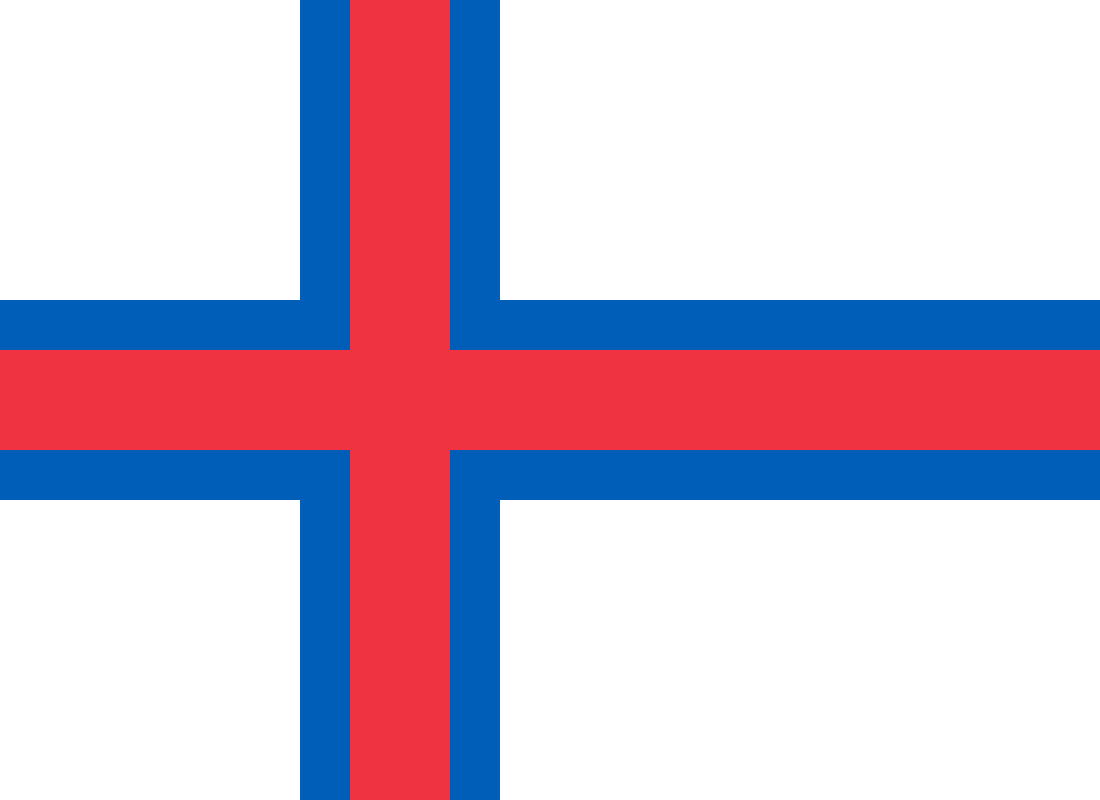
•The Faroese flag, known as the Merkið, features a Nordic cross and was first officially adopted in 1940.
•The Faroe Islands have a high degree of autonomy, with their own parliament, the Løgting, which governs many local affairs.
•Birdwatching is a popular activity in the Faroe Islands, especially for observing the large puffin colonies that nest on the cliffs.
•The islands experience a maritime climate, which contributes to their lush vegetation and unique ecosystem.
•Faroese music encompasses a rich tradition of folk songs, as well as a growing contemporary music scene that includes various genres.
Cities in Faroe Islands
Showing 6 cities (top 50 by population + business hubs). Click any city to view detailed time information.
Cities by Population
Related Pages
Popular Cities
v3.9.0-105-gf9fbc09b2-4317-f9fbc09