
New: booking links. Let people book you in their own time zone.
Current Local Time in 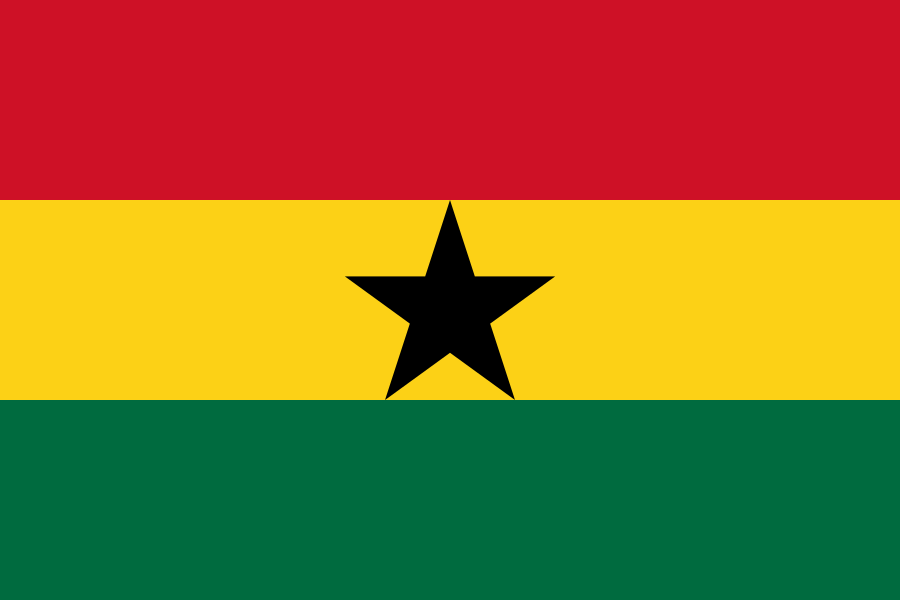 Ghana
Ghana
Find best meeting timeKumasi is already loaded in the meeting planner.
12hr|24hr

02:49:29pm
Sunday, October 25, 2026
Kumasi • Africa/Accra
Location
Interactive map loads after hydration. Capital coordinates: 6.69°N, -1.62°E.
Compare Times Live
The interactive time comparison grid loads in the live app. After the page hydrates you can add cities, drag rows, and share custom meeting windows.
HOME OF KENTE CLOTHASHANTI GOLDEN STOOLBIRTHPLACE OF COCOA PRODUCTIONLAKE VOLTA: MAN-MADE WONDERFESTIVAL OF THE DEAD: HOMOWOWATERFALLS OF AKOSOMBOFAMOUS FOR JOLLOF RICEHISTORIC ELMINA CASTLEGOLD COAST COLONY LEGACYNATIONAL ANTHEM: 'GOD BLESS OUR HOMELAND GHANA'KAKUM NATIONAL PARK CANOPY WALKDANCE OF THE SPIRITS: ADDAIFAMOUS GHANAIAN DRUMSBIBIANI GOLD MINESNATIONAL FLAG WITH MEANINGHOME OF KENTE CLOTHASHANTI GOLDEN STOOLBIRTHPLACE OF COCOA PRODUCTIONLAKE VOLTA: MAN-MADE WONDERFESTIVAL OF THE DEAD: HOMOWOWATERFALLS OF AKOSOMBOFAMOUS FOR JOLLOF RICEHISTORIC ELMINA CASTLEGOLD COAST COLONY LEGACYNATIONAL ANTHEM: 'GOD BLESS OUR HOMELAND GHANA'KAKUM NATIONAL PARK CANOPY WALKDANCE OF THE SPIRITS: ADDAIFAMOUS GHANAIAN DRUMSBIBIANI GOLD MINESNATIONAL FLAG WITH MEANINGHOME OF KENTE CLOTHASHANTI GOLDEN STOOLBIRTHPLACE OF COCOA PRODUCTIONLAKE VOLTA: MAN-MADE WONDERFESTIVAL OF THE DEAD: HOMOWOWATERFALLS OF AKOSOMBOFAMOUS FOR JOLLOF RICEHISTORIC ELMINA CASTLEGOLD COAST COLONY LEGACYNATIONAL ANTHEM: 'GOD BLESS OUR HOMELAND GHANA'KAKUM NATIONAL PARK CANOPY WALKDANCE OF THE SPIRITS: ADDAIFAMOUS GHANAIAN DRUMSBIBIANI GOLD MINESNATIONAL FLAG WITH MEANING
Country Information
Capital
KumasiPopulation
9,052,426
Area
238,533 km²
Largest City
KumasiDaylight Saving Time (DST)
Not Observed
ISO Code
GH / GHA
Time Zones
1 zone
Languages
English
Currency
Ghanaian Cedi (₵) - ₵100
Coordinates
Decimal:6.6885, -1.6244
DMS:6°41′19″N, 1°37′28″W
Elevation
Highest:885 m
Lowest:0 m
Average:443 m
International Dialing Code
+233
Time Zones
• Africa/Accra| GMT (UTC+0)
About Ghana
•Ghana was the first African nation to gain independence from colonial rule in 1957.
•The country's name is derived from the ancient Ghana Empire, which was located to the north of modern-day Ghana.
•Ghana is known for its rich cultural heritage, including vibrant festivals such as the Homowo and Panafest.
•The country is home to several UNESCO World Heritage Sites, including the historic slave trade forts and castles along the coast.
•Gold has been a significant aspect of Ghana's economy, earning it the nickname 'Gold Coast' during colonial times.
•The official language of Ghana is English, but many Ghanaians also speak indigenous languages such as Twi, Fante, and Ewe.
•Ghana is renowned for its traditional music and dance, with forms like Highlife and Azonto gaining international popularity.
•The country has a rich tradition of storytelling and oral history, often conveyed through proverbs and folktales.
•Ghana is one of the largest cocoa producers in the world, playing a vital role in the global chocolate industry.
•The Ashanti Region of Ghana is famous for its rich history and the Ashanti Kingdom, known for its golden regalia and elaborate rituals.
•Religion plays a significant role in Ghanaian society, with a diverse mix of Christianity, Islam, and traditional African beliefs.
•Lake Volta in Ghana is one of the largest artificial lakes in the world and is crucial for hydroelectric power generation.
•The country celebrates Independence Day on March 6th each year, commemorating its freedom from British rule.
•Ghana has a diverse geography, featuring coastal savannahs, tropical rainforests, and the Volta River, which is one of the longest rivers in Africa.
Cities in Ghana
Showing 10 cities (top 50 by population + business hubs). Click any city to view detailed time information.
Cities by Population
Related Pages
findtime.io
Popular Cities
v4.6-28-g4f8901461-6476-4f89014
