
New: booking links. Let people book you in their own time zone.
Current Local Time in 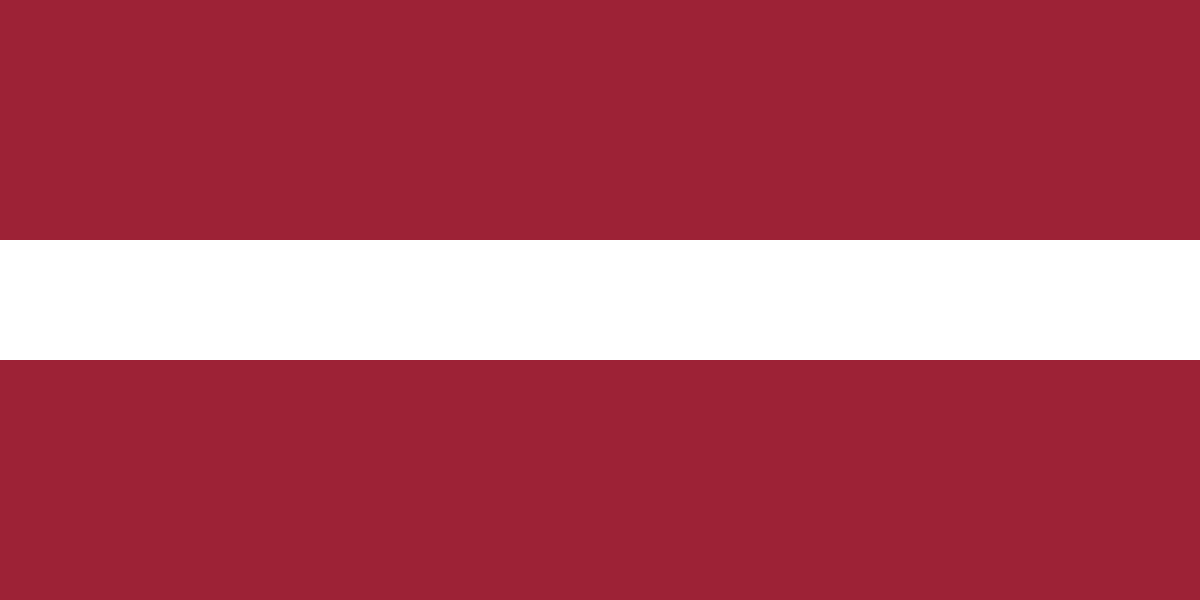 Latvia
Find best meeting timeRiga is already loaded in the meeting planner.
12hr|24hr

04:49:40pm
Sunday, October 25, 2026
Riga • Europe/Riga
Location
Interactive map loads after hydration. Capital coordinates: 56.95°N, 24.11°E.
Compare Times Live
The interactive time comparison grid loads in the live app. After the page hydrates you can add cities, drag rows, and share custom meeting windows.
HOME OF THE SONG AND DANCE FESTIVALUNESCO WORLD HERITAGE OLD TOWNLATVIAN LANGUAGE IS UNIQUEONE OF THE WORLD'S GREENEST COUNTRIESBIRDS MIGRATE THROUGH RIGALATVIAN NATIONAL DISH: GREENS AND MEATRIGA CENTRAL MARKET: EUROPE'S LARGESTBALTIC SEA COASTLINE WITH SANDY BEACHESANCIENT RIGA CASTLE DATING BACK TO 1330LATVIA'S VAST FORESTS COVER 50%FAMOUS FOR ITS ART NOUVEAU ARCHITECTURECULTURAL CAPITAL: RIGABIRCH SAP HARVESTING TRADITIONLATVIA HAS A STONEHENGE-LIKE STRUCTUREINVENTION OF THE FIRST LATVIAN TEAHOME OF THE SONG AND DANCE FESTIVALUNESCO WORLD HERITAGE OLD TOWNLATVIAN LANGUAGE IS UNIQUEONE OF THE WORLD'S GREENEST COUNTRIESBIRDS MIGRATE THROUGH RIGALATVIAN NATIONAL DISH: GREENS AND MEATRIGA CENTRAL MARKET: EUROPE'S LARGESTBALTIC SEA COASTLINE WITH SANDY BEACHESANCIENT RIGA CASTLE DATING BACK TO 1330LATVIA'S VAST FORESTS COVER 50%FAMOUS FOR ITS ART NOUVEAU ARCHITECTURECULTURAL CAPITAL: RIGABIRCH SAP HARVESTING TRADITIONLATVIA HAS A STONEHENGE-LIKE STRUCTUREINVENTION OF THE FIRST LATVIAN TEAHOME OF THE SONG AND DANCE FESTIVALUNESCO WORLD HERITAGE OLD TOWNLATVIAN LANGUAGE IS UNIQUEONE OF THE WORLD'S GREENEST COUNTRIESBIRDS MIGRATE THROUGH RIGALATVIAN NATIONAL DISH: GREENS AND MEATRIGA CENTRAL MARKET: EUROPE'S LARGESTBALTIC SEA COASTLINE WITH SANDY BEACHESANCIENT RIGA CASTLE DATING BACK TO 1330LATVIA'S VAST FORESTS COVER 50%FAMOUS FOR ITS ART NOUVEAU ARCHITECTURECULTURAL CAPITAL: RIGABIRCH SAP HARVESTING TRADITIONLATVIA HAS A STONEHENGE-LIKE STRUCTUREINVENTION OF THE FIRST LATVIAN TEA
Country Information
Capital
RigaPopulation
887,051
Area
64,559 km²
Largest City
RigaDaylight Saving Time (DST)
Observed
ISO Code
LV / LVA
Time Zones
1 zone
Languages
Latvian
Currency
Euro (€) - €100
Coordinates
Decimal:56.9460, 24.1059
DMS:56°56′46″N, 24°06′21″E
Elevation
Highest:312 m
Lowest:0 m
Average:156 m
International Dialing Code
+371
Time Zones
• Europe/Riga| EET (UTC+2)
Geographic Extremes
About Latvia
•Latvia declared its independence from Russia on November 18, 1918, following the end of World War I.
•The Latvian language is one of the oldest languages in Europe and belongs to the Baltic branch of the Indo-European language family.
•Riga, the capital of Latvia, is home to the largest collection of Art Nouveau architecture in Europe.
•The traditional Latvian folk dance is an important aspect of the country's cultural heritage and is often performed at national festivals.
•Latvia is known for its rich musical tradition, including the famous Latvian Song and Dance Festival, which has been recognized by UNESCO as an Intangible Cultural Heritage.
•The country has a diverse natural landscape, featuring vast forests, numerous lakes, and a long coastline along the Baltic Sea.
•Latvia's national dish is grey peas with speck, which reflects the agricultural heritage and traditional cuisine of the Baltic region.
•The Rundāle Palace, built in the 18th century, is one of Latvia's most significant baroque landmarks and a popular tourist destination.
•Latvia is also known for its innovative IT sector, which has contributed significantly to the country's economy in recent years.
•During the Soviet occupation, Latvia experienced significant political and social changes, which shaped its modern identity and governance.
•The country celebrates Midsummer's Eve, known as Jāņi, with various traditional rituals, including singing, dancing, and the lighting of bonfires.
•Latvia has an extensive network of protected nature reserves, including the Gauja National Park, which showcases the country's stunning landscapes and biodiversity.
•The Latvian State Song and Dance Festival is held every five years and gathers thousands of performers to celebrate national culture and heritage.
•Latvia is home to several UNESCO World Heritage Sites, including the historic center of Riga and the ancient forests of the Strūte River Valley.
Cities in Latvia
Showing 10 cities (top 50 by population + business hubs). Click any city to view detailed time information.
Cities by Population
Popular Cities in Latvia
Related Pages
findtime.io
Popular Cities
v4.6-28-g4f8901461-6476-4f89014
