
New: booking links. Let people book you in their own time zone.
Current Local Time in 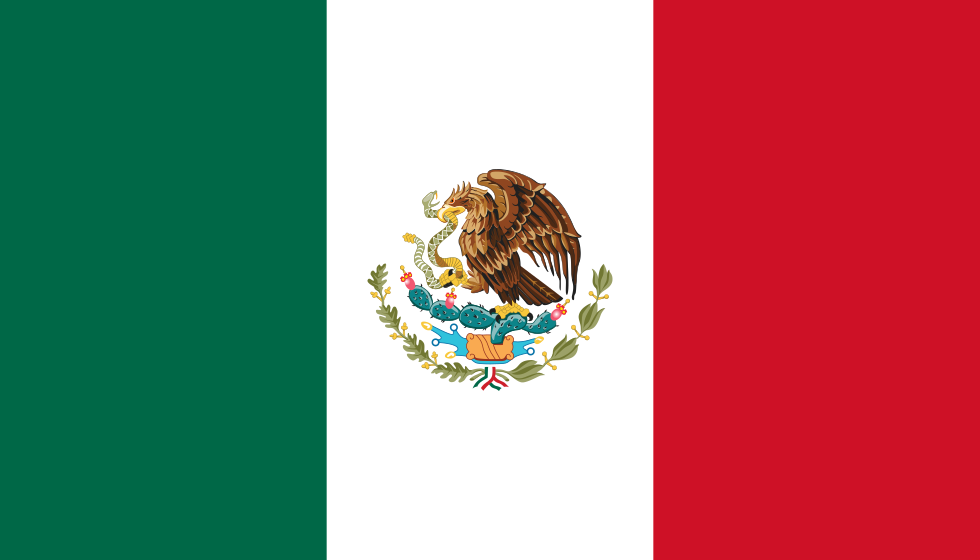 Mexico
Find best meeting timeMexico City is already loaded in the meeting planner.
12hr|24hr

09:44:37pm
Sunday, October 18, 2026
Mexico City • America/Mexico_City
Location
Interactive map loads after hydration. Capital coordinates: 19.43°N, -99.13°E.
Compare Times Live
The interactive time comparison grid loads in the live app. After the page hydrates you can add cities, drag rows, and share custom meeting windows.
HOME OF THE MAYAN CIVILIZATIONCHICHEN ITZA: WORLD HERITAGE SITECINCO DE MAYO CELEBRATIONORIGIN OF TEQUILADAY OF THE DEAD TRADITIONGUILLOTINE OF THE AZTECSMEXICO'S REVOLUTIONARY ART SCENECENOTES: NATURAL SWIMMING HOLESFAMOUS FOR MEXICAN MURALISMPAPALOTE CHILDREN'S MUSEUMMEXICAN HAT DANCEVOLCANOES: POPCATÉPETL & IZTACCÍHUATLMEXICAN CHOCOLATE LEGACYWONDER OF THE WORLD: TEOTIHUACÁNTHE FIRST COLOR TELEVISION INVENTEDHOME OF THE MAYAN CIVILIZATIONCHICHEN ITZA: WORLD HERITAGE SITECINCO DE MAYO CELEBRATIONORIGIN OF TEQUILADAY OF THE DEAD TRADITIONGUILLOTINE OF THE AZTECSMEXICO'S REVOLUTIONARY ART SCENECENOTES: NATURAL SWIMMING HOLESFAMOUS FOR MEXICAN MURALISMPAPALOTE CHILDREN'S MUSEUMMEXICAN HAT DANCEVOLCANOES: POPCATÉPETL & IZTACCÍHUATLMEXICAN CHOCOLATE LEGACYWONDER OF THE WORLD: TEOTIHUACÁNTHE FIRST COLOR TELEVISION INVENTEDHOME OF THE MAYAN CIVILIZATIONCHICHEN ITZA: WORLD HERITAGE SITECINCO DE MAYO CELEBRATIONORIGIN OF TEQUILADAY OF THE DEAD TRADITIONGUILLOTINE OF THE AZTECSMEXICO'S REVOLUTIONARY ART SCENECENOTES: NATURAL SWIMMING HOLESFAMOUS FOR MEXICAN MURALISMPAPALOTE CHILDREN'S MUSEUMMEXICAN HAT DANCEVOLCANOES: POPCATÉPETL & IZTACCÍHUATLMEXICAN CHOCOLATE LEGACYWONDER OF THE WORLD: TEOTIHUACÁNTHE FIRST COLOR TELEVISION INVENTED
Country Information
Capital
Mexico CityPopulation
76,982,112
Area
1,964,375 km²
Largest City
Mexico CityDaylight Saving Time (DST)
Not Observed
ISO Code
MX / MEX
Time Zones
10 zone
Languages
Spanish
Currency
Mexican Peso ($) - $100
Coordinates
Decimal:19.4285, -99.1277
DMS:19°25′42″N, 99°07′40″W
Elevation
Highest:5,636 m
Lowest:-10 m
Average:2,813 m
International Dialing Code
+52
Time Zones
• America/Cancun| EST (UTC-5)
• America/Chihuahua| CST (UTC-6)
• America/Ciudad_Juarez| MDT (UTC-6)
• America/Hermosillo| MST (UTC-7)
• America/Matamoros| CDT (UTC-5)
• America/Mazatlan| MST (UTC-7)
• America/Merida| CST (UTC-6)
• America/Mexico_City| CST (UTC-6)
• America/Monterrey| CST (UTC-6)
• America/Tijuana| PDT (UTC-7)
About Mexico
•Mexico is home to one of the world's oldest civilizations, the Olmecs, who thrived around 1200 BCE.
•The country has a rich cultural heritage that blends Indigenous traditions with Spanish colonial influences.
•Mexico's Day of the Dead is a UNESCO-recognized celebration honoring deceased loved ones with vibrant altars and offerings.
•The ancient city of Teotihuacan, known for its massive pyramids, was one of the largest cities in the ancient world.
•Mexico is the birthplace of the popular food items such as tacos, enchiladas, and mole, which are integral to its cuisine.
•The Mexican Revolution, which began in 1910, was a major armed struggle that transformed the country's social and political landscape.
•The country boasts diverse geographical features, including deserts, mountains, and lush rainforests, contributing to its rich biodiversity.
•Spanish is the official language of Mexico, but there are also 364 recognized Indigenous languages spoken throughout the country.
•The national drink of Mexico, tequila, is made from the blue agave plant and has cultural significance and economic importance.
•Mexico's economy is one of the largest in Latin America, with strong industries in manufacturing, agriculture, and tourism.
•The ancient Mayan civilization, known for its advanced knowledge in mathematics and astronomy, flourished in present-day southern Mexico.
•Chichen Itza, a UNESCO World Heritage site, features the famous pyramid of El Castillo and reflects the architectural achievements of the Maya.
•Mexico has a rich tradition of folk art, which includes colorful pottery, textiles, and intricate wood carvings.
•The country celebrates Independence Day on September 16th, commemorating its declaration of independence from Spain in 1810.
•The Sierra Madre mountain ranges run through Mexico, providing stunning landscapes and habitats for diverse wildlife.
Cities in Mexico
Showing 10 cities (top 50 by population + business hubs). Click any city to view detailed time information.
Cities by Population
Popular Cities in Mexico
Related Pages
findtime.io
Popular Cities
v4.5-854-geeca6caaf-6223-eeca6ca
