
findtime.io
3:44:15pm
Total Solar Eclipse· 22d 19h 1m 45s

🌅The sun rose at 6:56 AM
🌇The sun will set at 7:02 PM
☀️Sun will be up for 12h 5m today
12hr|24hr
10:44:15am
Tuesday, July 21, 2026
Yaren • Pacific/Nauru
Location
Interactive map loads after hydration. Capital coordinates: -0.55°N, 166.92°E.
Compare Times Live
The interactive time comparison grid loads in the live app. After the page hydrates you can add cities, drag rows, and share custom meeting windows.
WORLD'S SMALLEST ISLAND NATIONPHOSPHATE MINING HISTORYUNIQUE ONE-SIDED CURRENCYNAURUAN LANGUAGE ISOLATIONHISTORIC JAPANESE WWII TUNNELSCULTURAL DANCE: MERRINO ARMED FORCESLARGEST PHOSPHATE DEPOSITSNATIVE NAURUAN TRADITIONSVAST CORAL REEFSSUSTAINABLE FISHING PRACTICESNATIONAL FLAG FEATURES A STARNAURU'S 'CAVE OF DREAMS'TRADITIONAL WEAVING ARTISTRYUNIQUE COASTAL LANDSCAPESWORLD'S SMALLEST ISLAND NATIONPHOSPHATE MINING HISTORYUNIQUE ONE-SIDED CURRENCYNAURUAN LANGUAGE ISOLATIONHISTORIC JAPANESE WWII TUNNELSCULTURAL DANCE: MERRINO ARMED FORCESLARGEST PHOSPHATE DEPOSITSNATIVE NAURUAN TRADITIONSVAST CORAL REEFSSUSTAINABLE FISHING PRACTICESNATIONAL FLAG FEATURES A STARNAURU'S 'CAVE OF DREAMS'TRADITIONAL WEAVING ARTISTRYUNIQUE COASTAL LANDSCAPESWORLD'S SMALLEST ISLAND NATIONPHOSPHATE MINING HISTORYUNIQUE ONE-SIDED CURRENCYNAURUAN LANGUAGE ISOLATIONHISTORIC JAPANESE WWII TUNNELSCULTURAL DANCE: MERRINO ARMED FORCESLARGEST PHOSPHATE DEPOSITSNATIVE NAURUAN TRADITIONSVAST CORAL REEFSSUSTAINABLE FISHING PRACTICESNATIONAL FLAG FEATURES A STARNAURU'S 'CAVE OF DREAMS'TRADITIONAL WEAVING ARTISTRYUNIQUE COASTAL LANDSCAPES
Country Information
Capital
YarenPopulation
12,600
Area
21 km²
Largest City
YarenDaylight Saving Time (DST)
Not Observed
ISO Code
NR / NRU
Time Zones
1 zone
Languages
English, Nauruan
Currency
Australian Dollar ($) - $100
Coordinates
Decimal:-0.5519, 166.9236
DMS:0°33′07″S, 166°55′25″E
Elevation
Highest:61 m
Lowest:0 m
Average:31 m
International Dialing Code
+674
Time Zones
• Pacific/Nauru| NRT (UTC+12)
About Nauru
•Nauru is the third smallest country in the world by land area, following Vatican City and Monaco.
•The island of Nauru was first settled by Micronesian and Polynesian peoples over 3,000 years ago.
•Nauru was once a significant producer of phosphate, which played a crucial role in its economy during the late 20th century.
•The indigenous Nauruan people have a rich cultural heritage that includes unique music, dance, and traditional storytelling.
•Nauru is known for its distinctive limestone cliffs and rich biodiversity, including several endemic bird species.
•The country has a unique system of governance where the president is also the head of government, and there are no formal political parties.
•Traditional Nauruan cuisine includes dishes made from fish, coconut, and taro, reflecting the island's abundant natural resources.
•Nauru's economy has been challenged by the depletion of its phosphate reserves, leading to efforts to diversify into tourism and fishing.
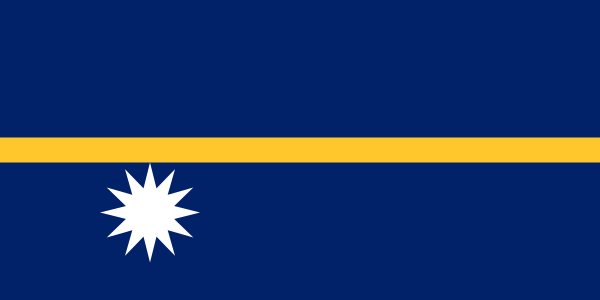
•Nauru's national symbol is the Nauruan flag, which features a blue field with a white star and a yellow stripe.
•The island is home to the Nauru International Airport, which is one of the few airports in the Pacific region that can accommodate large aircraft.
•Nauru's official languages are Nauruan and English, with Nauruan being an Austronesian language unique to the island.
•The country has a rich tradition of handicrafts, including weaving and the creation of traditional ornaments from local materials.
•Nauru has been a center for various international treaties and agreements, especially concerning environmental and maritime issues.
•The island's geography features a central plateau surrounded by a coastal plain, with a few freshwater lakes found in the interior.
Cities in Nauru
Showing 8 cities (top 50 by population + business hubs). Click any city to view detailed time information.
Cities by Population
Related Pages
Popular Cities
v3.9.0-105-gf9fbc09b2-4317-f9fbc09