
New: booking links. Let people book you in their own time zone.
Current Local Time in 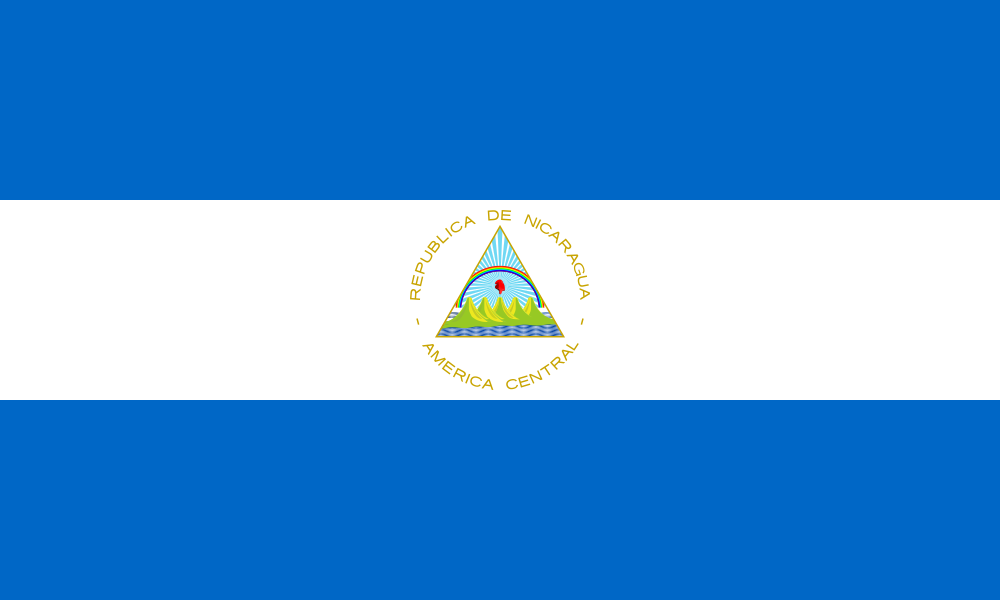 Nicaragua
Find best meeting timeManagua is already loaded in the meeting planner.
12hr|24hr

09:44:41pm
Sunday, October 18, 2026
Managua • America/Managua
Location
Interactive map loads after hydration. Capital coordinates: 12.13°N, -86.25°E.
Compare Times Live
The interactive time comparison grid loads in the live app. After the page hydrates you can add cities, drag rows, and share custom meeting windows.
LAKE NICARAGUA: CENTRAL AMERICA'S LARGESTVOLCANO BOARDING ON MUNDIAPA VOLCANOHOMELAND OF THE NICARAGUAN CANALNATIONAL DISH: GALLO PINTOTRADITIONAL FOLK DANCE: PALO DE MAYOFIRST COUNTRY TO GRANT WOMEN'S VOTE IN LATIN AMERICALA MERCED CHURCH: COLONIAL ARCHITECTURE GEMHOME TO THE OLDEST CONTINUOUSLY INHABITED CITY IN THE AMERICASNICARAGUA IS THE LAND OF LAKES AND VOLCANOESTELETON: NATIONAL CHARITY TELETHON EVENTCOFFEE EXPORTER: HIGH-QUALITY ARABICANICARAGUAN SIGN LANGUAGE: UNIQUE CREATIONCORN IS A CULTURAL STAPLESANDINISTA REVOLUTION: 20TH CENTURY TURNING POINTDANZÓN: TRADITIONAL SOCIAL DANCE IN NICARAGUALAKE NICARAGUA: CENTRAL AMERICA'S LARGESTVOLCANO BOARDING ON MUNDIAPA VOLCANOHOMELAND OF THE NICARAGUAN CANALNATIONAL DISH: GALLO PINTOTRADITIONAL FOLK DANCE: PALO DE MAYOFIRST COUNTRY TO GRANT WOMEN'S VOTE IN LATIN AMERICALA MERCED CHURCH: COLONIAL ARCHITECTURE GEMHOME TO THE OLDEST CONTINUOUSLY INHABITED CITY IN THE AMERICASNICARAGUA IS THE LAND OF LAKES AND VOLCANOESTELETON: NATIONAL CHARITY TELETHON EVENTCOFFEE EXPORTER: HIGH-QUALITY ARABICANICARAGUAN SIGN LANGUAGE: UNIQUE CREATIONCORN IS A CULTURAL STAPLESANDINISTA REVOLUTION: 20TH CENTURY TURNING POINTDANZÓN: TRADITIONAL SOCIAL DANCE IN NICARAGUALAKE NICARAGUA: CENTRAL AMERICA'S LARGESTVOLCANO BOARDING ON MUNDIAPA VOLCANOHOMELAND OF THE NICARAGUAN CANALNATIONAL DISH: GALLO PINTOTRADITIONAL FOLK DANCE: PALO DE MAYOFIRST COUNTRY TO GRANT WOMEN'S VOTE IN LATIN AMERICALA MERCED CHURCH: COLONIAL ARCHITECTURE GEMHOME TO THE OLDEST CONTINUOUSLY INHABITED CITY IN THE AMERICASNICARAGUA IS THE LAND OF LAKES AND VOLCANOESTELETON: NATIONAL CHARITY TELETHON EVENTCOFFEE EXPORTER: HIGH-QUALITY ARABICANICARAGUAN SIGN LANGUAGE: UNIQUE CREATIONCORN IS A CULTURAL STAPLESANDINISTA REVOLUTION: 20TH CENTURY TURNING POINTDANZÓN: TRADITIONAL SOCIAL DANCE IN NICARAGUA
Country Information
Capital
ManaguaPopulation
1,730,279
Area
130,373 km²
Largest City
ManaguaDaylight Saving Time (DST)
Not Observed
ISO Code
NI / NIC
Time Zones
1 zone
Languages
Spanish
Currency
Nicaraguan Córdoba (C$) - C$100
Coordinates
Decimal:12.1328, -86.2504
DMS:12°07′58″N, 86°15′01″W
Elevation
Highest:2,438 m
Lowest:0 m
Average:1,219 m
International Dialing Code
+505
Time Zones
• America/Managua| CST (UTC-6)
Geographic Extremes
About Nicaragua
•Nicaragua is known for its diverse ecosystems, which include tropical rainforests, volcanic landscapes, and extensive coastlines along both the Pacific Ocean and the Caribbean Sea.
•The country is home to Lake Nicaragua, which is the largest lake in Central America and features freshwater sharks, a unique characteristic in the world.
•Nicaragua has a rich history influenced by indigenous cultures, Spanish colonization, and revolutionary movements throughout the 20th century.
•The Sandinista Revolution of 1979 was a significant event in Nicaragua's history, leading to the overthrow of the Somoza dictatorship.
•Nicaraguan cuisine is deeply influenced by its indigenous roots and Spanish colonial heritage, with dishes like gallo pinto being a staple of the diet.
•The country celebrates various traditional festivals, including La Purísima, honoring the Virgin of Immaculate Conception, which is marked with vibrant processions and festivities.
•Nicaragua is often referred to as the 'Land of Lakes and Volcanoes' due to its numerous lakes and the presence of several active volcanoes, including Masaya and Mombacho.
•Spanish is the official language of Nicaragua, but there are also several indigenous languages spoken throughout the country, such as Miskito and Garifuna.
•The Basilica de la Asunción in León is a UNESCO World Heritage site and is considered one of the most important colonial-era churches in Central America.
•Nicaragua has a strong tradition of poetry and literature, with notable figures such as Rubén Darío, who is celebrated as the father of modernismo in Spanish literature.
•The economy of Nicaragua is primarily based on agriculture, with coffee, sugar, and tobacco being major exports.
•Nicaragua is home to the world's second-largest rainforest, the Bosawas Biosphere Reserve, which is a UNESCO World Biosphere Reserve.
•The country has a vibrant music scene, with genres such as marimba and punta being integral to its cultural identity.
•In 2018, Nicaragua faced widespread protests against government policies, which led to significant political and social change within the country.
•The country is known for its rich biodiversity, with many species of flora and fauna that are unique to the region.
Cities in Nicaragua
Showing 10 cities (top 50 by population + business hubs). Click any city to view detailed time information.
Cities by Population
Popular Cities in Nicaragua
Related Pages
findtime.io
Popular Cities
v4.5-854-geeca6caaf-6223-eeca6ca
