
findtime.io
3:44:28pm
Total Solar Eclipse· 22d 19h 1m 32s

🌅The sun will rise at 5:17 AM
🌇The sun will set at 8:06 PM
☀️Sun will be up for 14h 49m today
12hr|24hr
12:44:28am
Tuesday, July 21, 2026
Skopje • Europe/Skopje
Location
Interactive map loads after hydration. Capital coordinates: 42.00°N, 21.43°E.
Compare Times Live
The interactive time comparison grid loads in the live app. After the page hydrates you can add cities, drag rows, and share custom meeting windows.
HOME OF LAKE OHRIDBIRTHPLACE OF MOTHER TERESAOLD BAZAAR IN SKOPJEUNESCO WORLD HERITAGE SITESTRADITIONAL TAVCE GRAVCE DISHMACEDONIAN LANGUAGE AUTHORITYALEXANDER THE GREAT'S LEGACYNATURAL BRIDGE OF VRELOMAVROVO NATIONAL PARKFAMOUS FOR WOVEN RUGSANCIENT CITY OF HERACLEAMUSIC OF THE PIRENA FESTIVALUNIQUE KALDJIJA TRADITIONRICH FOLKLORE AND DANCESCULTURAL DIVERSITY IN SKOPJEHOME OF LAKE OHRIDBIRTHPLACE OF MOTHER TERESAOLD BAZAAR IN SKOPJEUNESCO WORLD HERITAGE SITESTRADITIONAL TAVCE GRAVCE DISHMACEDONIAN LANGUAGE AUTHORITYALEXANDER THE GREAT'S LEGACYNATURAL BRIDGE OF VRELOMAVROVO NATIONAL PARKFAMOUS FOR WOVEN RUGSANCIENT CITY OF HERACLEAMUSIC OF THE PIRENA FESTIVALUNIQUE KALDJIJA TRADITIONRICH FOLKLORE AND DANCESCULTURAL DIVERSITY IN SKOPJEHOME OF LAKE OHRIDBIRTHPLACE OF MOTHER TERESAOLD BAZAAR IN SKOPJEUNESCO WORLD HERITAGE SITESTRADITIONAL TAVCE GRAVCE DISHMACEDONIAN LANGUAGE AUTHORITYALEXANDER THE GREAT'S LEGACYNATURAL BRIDGE OF VRELOMAVROVO NATIONAL PARKFAMOUS FOR WOVEN RUGSANCIENT CITY OF HERACLEAMUSIC OF THE PIRENA FESTIVALUNIQUE KALDJIJA TRADITIONRICH FOLKLORE AND DANCESCULTURAL DIVERSITY IN SKOPJE
Country Information
Capital
SkopjePopulation
820,990
Area
25,713 km²
Largest City
SkopjeDaylight Saving Time (DST)
Not Observed
ISO Code
MK / MKD
Time Zones
1 zone
Languages
Macedonian
Currency
Macedonian Denar (ден) - ден100
Coordinates
Decimal:41.9965, 21.4314
DMS:41°59′47″N, 21°25′53″E
Elevation
Highest:2,764 m
Lowest:50 m
Average:1,407 m
International Dialing Code
+389
Time Zones
• Europe/Skopje| CEST (UTC+2)
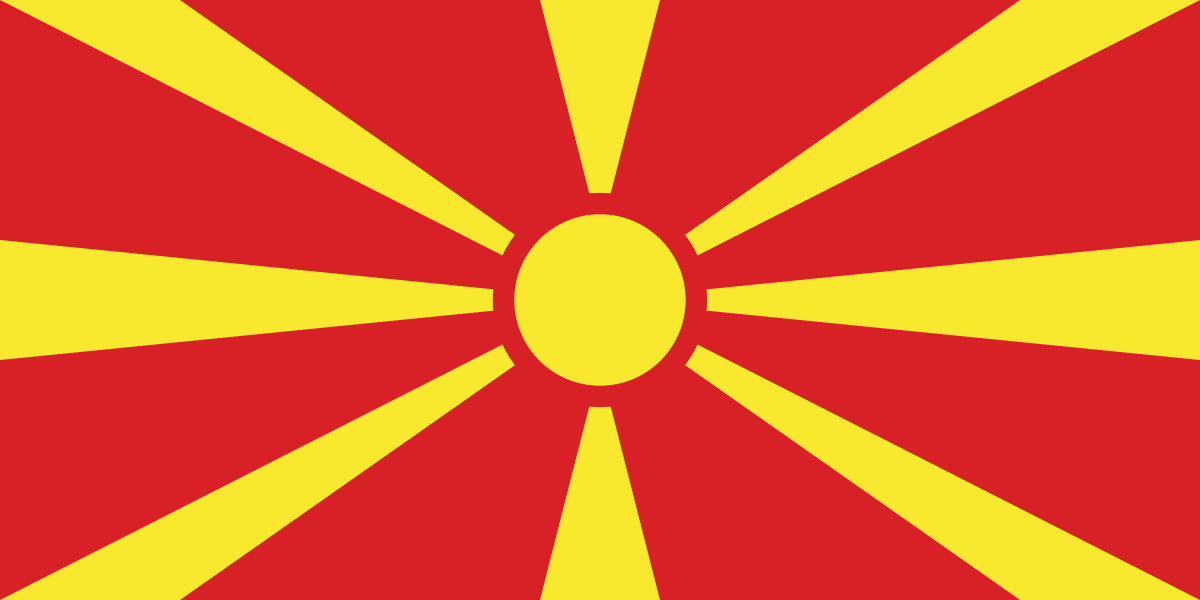
About North Macedonia
•North Macedonia declared independence from Yugoslavia on September 8, 1991, following a peaceful referendum.
•The country is home to Lake Ohrid, one of the oldest and deepest lakes in Europe, which is a UNESCO World Heritage site.
•Macedonian is the official language of North Macedonia, and it is written in the Cyrillic script.
•The Ohrid Summer Festival, held annually, showcases a variety of cultural events including music, theater, and dance.
•The country has a rich tradition of folk music and dance, with a strong influence from both Slavic and Balkan cultures.
•North Macedonia is known for its historical sites, including the ancient city of Heraclea Lyncestis, founded by Philip II of Macedon.
•The country observes the Feast of St. Clement of Ohrid, honoring one of its most revered saints and a key figure in the development of the Cyrillic alphabet.
•The Vardar River is the longest river in North Macedonia and flows through the heart of the country into the Aegean Sea.
•North Macedonia has a diverse religious landscape, with the majority of the population adhering to Eastern Orthodoxy, followed by Islam.
•The architecture of Skopje features a mix of Ottoman, Byzantine, and modern styles, reflecting the city's diverse history.
•The country's traditional cuisine includes dishes such as ajvar, tavče gravče, and various grilled meats, influenced by Mediterranean and Balkan flavors.
•In 2019, North Macedonia officially changed its name from the former Yugoslav Republic of Macedonia (FYROM) to resolve a long-standing dispute with Greece.
•The country's natural parks, such as Pelister and Mavrovo, are important for biodiversity and offer opportunities for outdoor activities like hiking and skiing.
•North Macedonia is known for its wine production, with vineyards located primarily in the Tikveš region, which has a history of viticulture dating back to ancient times.
Cities in North Macedonia
Showing 10 cities (top 50 by population + business hubs). Click any city to view detailed time information.
Cities by Population
Cities in North Macedonia
Columns75 cities
Related Pages
Popular Cities
v3.9.0-105-gf9fbc09b2-4317-f9fbc09