
New: booking links. Let people book you in their own time zone.
Current Local Time in 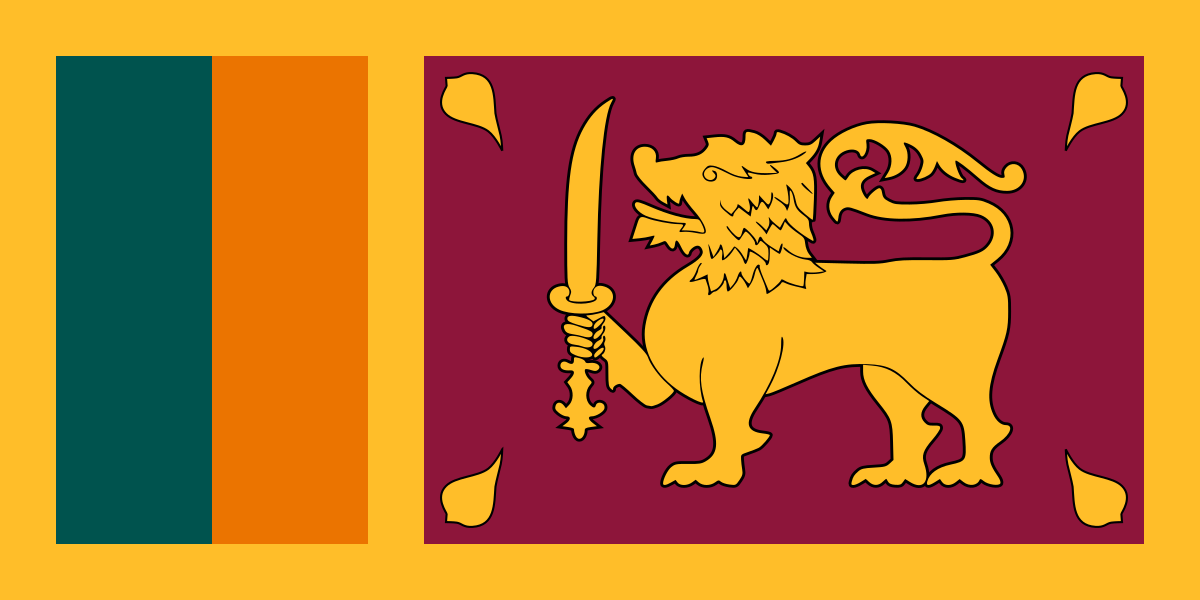 Sri Lanka
Find best meeting timeColombo is already loaded in the meeting planner.
12hr|24hr

08:16:20pm
Monday, October 19, 2026
Colombo • Asia/Colombo
Location
Interactive map loads after hydration. Capital coordinates: 6.94°N, 79.85°E.
Compare Times Live
The interactive time comparison grid loads in the live app. After the page hydrates you can add cities, drag rows, and share custom meeting windows.
HOME OF THE SERENDIPITYANCIENT SIGIRIYA ROCK FORTRESSBIRTHPLACE OF CINNAMONUNESCO BIOSPHERE RESERVEKANDYAN DANCE TRADITIONSRI LANKA TEA PLANTATIONSBUDDHIST TEMPLES GALORELARGEST SRI LANKAN ELEPHANTSUNIQUE GEMS AND JEWELRYRITUAL OF KANDYAN PERAHERAAYURVEDIC MEDICINE HERITAGEDIVERSE WILDLIFE SANCTUARIESCOLOMBO'S FORT AREA HISTORYSRI LANKAN CRICKET PASSIONTRADITIONAL MASK MAKING ARTHOME OF THE SERENDIPITYANCIENT SIGIRIYA ROCK FORTRESSBIRTHPLACE OF CINNAMONUNESCO BIOSPHERE RESERVEKANDYAN DANCE TRADITIONSRI LANKA TEA PLANTATIONSBUDDHIST TEMPLES GALORELARGEST SRI LANKAN ELEPHANTSUNIQUE GEMS AND JEWELRYRITUAL OF KANDYAN PERAHERAAYURVEDIC MEDICINE HERITAGEDIVERSE WILDLIFE SANCTUARIESCOLOMBO'S FORT AREA HISTORYSRI LANKAN CRICKET PASSIONTRADITIONAL MASK MAKING ARTHOME OF THE SERENDIPITYANCIENT SIGIRIYA ROCK FORTRESSBIRTHPLACE OF CINNAMONUNESCO BIOSPHERE RESERVEKANDYAN DANCE TRADITIONSRI LANKA TEA PLANTATIONSBUDDHIST TEMPLES GALORELARGEST SRI LANKAN ELEPHANTSUNIQUE GEMS AND JEWELRYRITUAL OF KANDYAN PERAHERAAYURVEDIC MEDICINE HERITAGEDIVERSE WILDLIFE SANCTUARIESCOLOMBO'S FORT AREA HISTORYSRI LANKAN CRICKET PASSIONTRADITIONAL MASK MAKING ART
Country Information
Capital
ColomboPopulation
2,993,810
Area
65,610 km²
Largest City
ColomboDaylight Saving Time (DST)
Not Observed
ISO Code
LK / LKA
Time Zones
1 zone
Languages
Sinhala, Tamil
Currency
Sri Lankan Rupee (Rs) - Rs100
Coordinates
Decimal:6.9355, 79.8487
DMS:6°56′08″N, 79°50′55″E
Elevation
Highest:2,524 m
Lowest:0 m
Average:1,262 m
International Dialing Code
+94
Time Zones
• Asia/Colombo| GMT+5:30 (UTC+5:30)
Geographic Extremes
About Sri Lanka
•Sri Lanka is known for its rich history that dates back over 2,500 years.
•The island was called Ceylon during British colonial rule from 1815 to 1948.
•Buddhism is the predominant religion in Sri Lanka, with the majority of the population identifying as Buddhist.
•The ancient city of Anuradhapura was one of the first capitals of Sri Lanka and is a UNESCO World Heritage Site.
•Sri Lanka has a diverse cultural heritage influenced by various ethnic groups, including Sinhalese and Tamils.
•The traditional dance forms of Sri Lanka, such as Kandyan and Low Country dance, are integral to its cultural identity.
•Sri Lanka is famous for its tea production, particularly Ceylon tea, which is renowned worldwide.
•The country is home to the Sigiriya rock fortress, an ancient royal citadel that is also a UNESCO World Heritage Site.
•The annual Esala Perahera festival in Kandy is one of the oldest and grandest Buddhist festivals in Sri Lanka.
•Sri Lanka has diverse ecosystems, including rainforests, wetlands, and coastal areas that support a rich variety of flora and fauna.
•The country’s economy is primarily based on agriculture, with tea, rubber, and coconut being significant cash crops.
•Sri Lanka is known for its traditional art forms, including intricate wood carvings and vibrant handicrafts.
•The Sinhalese language is one of the official languages of Sri Lanka, alongside Tamil.
•Sri Lanka is renowned for its biodiversity, housing several national parks that are home to elephants, leopards, and a variety of birds.
•The ancient irrigation system of Sri Lanka, developed over 2,000 years ago, showcases the country’s advanced engineering skills.
Cities in Sri Lanka
Showing 10 cities (top 50 by population + business hubs). Click any city to view detailed time information.
Cities by Population
Popular Cities in Sri Lanka
Related Pages
findtime.io
Popular Cities
v4.5-870-g01d5cb90b-6239-01d5cb9
