
New: booking links. Let people book you in their own time zone.
Current Local Time in 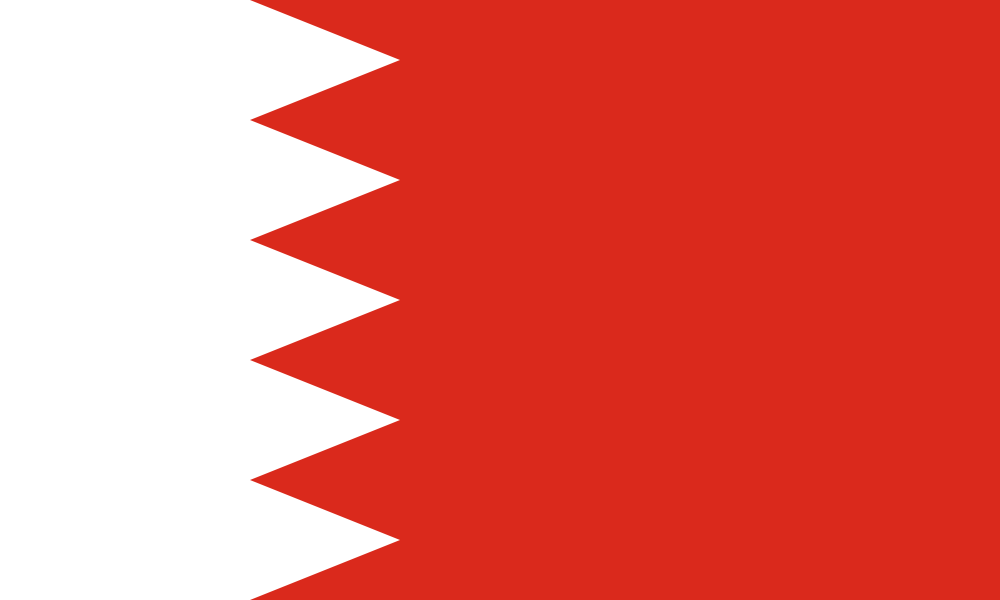 Bahrain
Find best meeting timeAr Rifā‘ is already loaded in the meeting planner.
12hr|24hr

05:49:10pm
Sunday, October 25, 2026
Ar Rifā‘ • Asia/Bahrain
Location
Interactive map loads after hydration. Capital coordinates: 26.13°N, 50.55°E.
Compare Times Live
The interactive time comparison grid loads in the live app. After the page hydrates you can add cities, drag rows, and share custom meeting windows.
ISLAND NATION IN PERSIAN GULFHOMELAND OF BAHRAINI TRADITIONAL DANCEFIRST COUNTRY TO DISCOVER OIL IN GULFANCIENT DILMUN CIVILIZATION SITEFAMOUS FOR PEARL DIVING HISTORYHAS A UNIQUE ARABIC DIALCT CALLED BAHRAINIHOSTS ANNUAL BAHRAIN GRAND PRIXOLD BAHRAIN FORT UNESCO SITETRADITIONAL BAHRAINI CUISINE INCLUDES MANDIPILLARS OF BAHRAIN: PRE-ISLAMIC RELIGIOUS SITEBAHRAIN'S DATE PALM CULTIVATIONHOSTS THE BAHRAIN INTERNATIONAL CIRCUITBAHRAIN'S TRADITIONAL MARKET: SOUQBAHRAIN'S FAMOUS GULF COASTLINENATION OF PEACE AND DIALOGUE INITIATIVESISLAND NATION IN PERSIAN GULFHOMELAND OF BAHRAINI TRADITIONAL DANCEFIRST COUNTRY TO DISCOVER OIL IN GULFANCIENT DILMUN CIVILIZATION SITEFAMOUS FOR PEARL DIVING HISTORYHAS A UNIQUE ARABIC DIALCT CALLED BAHRAINIHOSTS ANNUAL BAHRAIN GRAND PRIXOLD BAHRAIN FORT UNESCO SITETRADITIONAL BAHRAINI CUISINE INCLUDES MANDIPILLARS OF BAHRAIN: PRE-ISLAMIC RELIGIOUS SITEBAHRAIN'S DATE PALM CULTIVATIONHOSTS THE BAHRAIN INTERNATIONAL CIRCUITBAHRAIN'S TRADITIONAL MARKET: SOUQBAHRAIN'S FAMOUS GULF COASTLINENATION OF PEACE AND DIALOGUE INITIATIVESISLAND NATION IN PERSIAN GULFHOMELAND OF BAHRAINI TRADITIONAL DANCEFIRST COUNTRY TO DISCOVER OIL IN GULFANCIENT DILMUN CIVILIZATION SITEFAMOUS FOR PEARL DIVING HISTORYHAS A UNIQUE ARABIC DIALCT CALLED BAHRAINIHOSTS ANNUAL BAHRAIN GRAND PRIXOLD BAHRAIN FORT UNESCO SITETRADITIONAL BAHRAINI CUISINE INCLUDES MANDIPILLARS OF BAHRAIN: PRE-ISLAMIC RELIGIOUS SITEBAHRAIN'S DATE PALM CULTIVATIONHOSTS THE BAHRAIN INTERNATIONAL CIRCUITBAHRAIN'S TRADITIONAL MARKET: SOUQBAHRAIN'S FAMOUS GULF COASTLINENATION OF PEACE AND DIALOGUE INITIATIVES
Country Information
Capital
Ar Rifā‘Population
505,604
Area
765 km²
Largest City
Ar Rifā‘Daylight Saving Time (DST)
Not Observed
ISO Code
BH / BHR
Time Zones
1 zone
Languages
Arabic
Currency
Bahraini Dinar (.د.ب) - .د.ب100
Coordinates
Decimal:26.1300, 50.5550
DMS:26°07′48″N, 50°33′18″E
Elevation
Highest:122 m
Lowest:0 m
Average:61 m
International Dialing Code
+973
Time Zones
• Asia/Bahrain| GMT+3 (UTC+3)
Geographic Extremes
About Bahrain
•Bahrain has a rich history as one of the oldest inhabited places in the Persian Gulf, with evidence of human settlement dating back to the Dilmun civilization around 3000 BC.
•The Bahrain Fort, also known as Qal'at al-Bahrain, is a UNESCO World Heritage Site and a significant archaeological site that showcases the island's historical significance.
•Bahrain is known for its thriving pearl diving industry, which was a major economic driver before the discovery of oil in the 20th century.
•The country has a unique blend of Arab and Persian cultures, reflected in its cuisine, music, and arts.
•Bahrain is home to the Bahrain National Museum, which houses artifacts that trace the country's history from ancient times to the present.
•The majority of the population in Bahrain is Muslim, with Islam being the state religion and significantly influencing the country's culture and traditions.
•Bahraini traditional crafts, such as weaving, pottery, and metalwork, hold an important place in the country’s cultural heritage.
•The annual Bahrain International Airshow showcases the country as a center for aviation and aerospace in the region.
•Bahrain was the first country in the Gulf to discover oil in 1932, which transformed its economy and led to rapid development.
•The Tree of Life, a 400-year-old mesquite tree, is a famous natural landmark in Bahrain, standing alone in the desert and drawing many visitors.
•The country celebrates its national day on December 16 each year, commemorating the establishment of the modern state in 1971.
•Bahrain has a diverse economy, with significant contributions from finance, tourism, and manufacturing sectors.
•Arabic is the official language of Bahrain, but English is widely spoken and used in business and education.
•The Bahrain Formula One Grand Prix is a notable annual event that attracts motorsport enthusiasts from around the world.
Cities in Bahrain
Showing 7 cities (top 50 by population + business hubs). Click any city to view detailed time information.
Cities by Population
Popular Cities in Bahrain
Related Pages
findtime.io
Popular Cities
v4.6-28-g4f8901461-6476-4f89014
