
New: booking links. Let people book you in their own time zone.
Current Local Time in 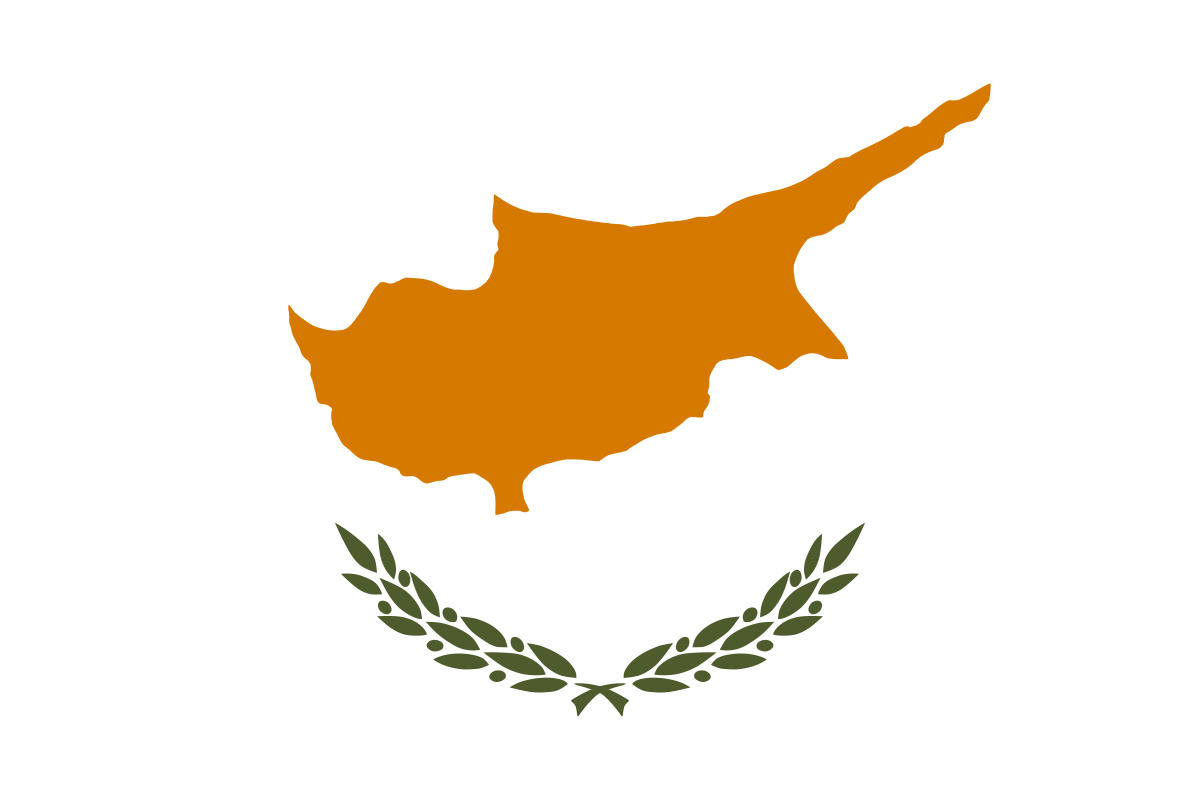 Cyprus
Find best meeting timeNicosia is already loaded in the meeting planner.
12hr|24hr

04:49:22pm
Sunday, October 25, 2026
Nicosia • Asia/Nicosia
Location
Interactive map loads after hydration. Capital coordinates: 35.17°N, 33.35°E.
Compare Times Live
The interactive time comparison grid loads in the live app. After the page hydrates you can add cities, drag rows, and share custom meeting windows.
BIRTHPLACE OF APHRODITEDIVIDED SINCE 1974HOME OF HALLOUMI CHEESEFIRST WRITTEN LAW CODEFAMOUS FOR ANCIENT RUINSUNIQUE CYPRIOT COFFEE CULTURECROSSROADS OF CIVILIZATIONSTRADITIONAL LOUKOUMCYPRUS SALT LAKESFAMOUS FOR MEDITERRANEAN CUISINEUNESCO WORLD HERITAGE SITESCYPRIOT TRADITIONAL MUSICVIBRANT FESTIVAL OF KOURIONSPECTACULAR TROODOS MOUNTAINSLEGENDARY ZIVANIA DISTILLATEBIRTHPLACE OF APHRODITEDIVIDED SINCE 1974HOME OF HALLOUMI CHEESEFIRST WRITTEN LAW CODEFAMOUS FOR ANCIENT RUINSUNIQUE CYPRIOT COFFEE CULTURECROSSROADS OF CIVILIZATIONSTRADITIONAL LOUKOUMCYPRUS SALT LAKESFAMOUS FOR MEDITERRANEAN CUISINEUNESCO WORLD HERITAGE SITESCYPRIOT TRADITIONAL MUSICVIBRANT FESTIVAL OF KOURIONSPECTACULAR TROODOS MOUNTAINSLEGENDARY ZIVANIA DISTILLATEBIRTHPLACE OF APHRODITEDIVIDED SINCE 1974HOME OF HALLOUMI CHEESEFIRST WRITTEN LAW CODEFAMOUS FOR ANCIENT RUINSUNIQUE CYPRIOT COFFEE CULTURECROSSROADS OF CIVILIZATIONSTRADITIONAL LOUKOUMCYPRUS SALT LAKESFAMOUS FOR MEDITERRANEAN CUISINEUNESCO WORLD HERITAGE SITESCYPRIOT TRADITIONAL MUSICVIBRANT FESTIVAL OF KOURIONSPECTACULAR TROODOS MOUNTAINSLEGENDARY ZIVANIA DISTILLATE
Country Information
Capital
NicosiaPopulation
494,356
Area
9,251 km²
Largest City
NicosiaDaylight Saving Time (DST)
Observed
ISO Code
CY / CYP
Time Zones
1 zone
Languages
Greek, Turkish
Currency
Euro (€) - €100
Coordinates
Decimal:35.1728, 33.3540
DMS:35°10′22″N, 33°21′14″E
Elevation
Highest:1,951 m
Lowest:0 m
Average:976 m
International Dialing Code
+357
Time Zones
• Asia/Nicosia| EET (UTC+2)
About Cyprus
•Cyprus has a rich history that dates back to the Neolithic period, with evidence of human settlement found at sites like Choirokoitia.
•The island has been influenced by various civilizations, including the Greeks, Romans, Byzantines, and Ottomans, which is reflected in its cultural heritage.
•Cyprus is known for its unique tradition of 'Meze,' a collection of small dishes served as a meal, showcasing a variety of local flavors.
•The island is home to the ancient city of Salamis, which was an important center of trade and culture in antiquity.
•Cyprus has a significant number of Byzantine churches and monasteries, many of which are UNESCO World Heritage Sites.
•The Troodos Mountains provide a stunning backdrop to the island and are home to beautiful nature trails and endemic plant species.
•Greek and Turkish are the official languages of Cyprus, reflecting its diverse cultural heritage and historical divisions.
•The island's economy is heavily reliant on tourism, which is a major contributor to its GDP, attracting millions of visitors each year.
•Cyprus is famous for its production of Halloumi cheese, which has become a well-known product internationally.
•The island's beaches, such as those in Ayia Napa and Protaras, are renowned for their crystal-clear waters and beautiful scenery.
•Cyprus has a long-standing tradition of folk dancing, with various regional styles that are performed during festivals and celebrations.
•The city of Nicosia is the last divided capital in Europe, a result of the political conflict that began in 1974.
•Cyprus played a strategic role in the Eastern Mediterranean during ancient times, serving as a crucial trade route between Europe, Asia, and Africa.
•The Cypriot cuisine is a blend of Greek, Turkish, and Middle Eastern influences, featuring dishes like Souvlaki and Kleftiko.
Cities in Cyprus
Showing 10 cities (top 50 by population + business hubs). Click any city to view detailed time information.
Cities by Population
Related Pages
findtime.io
Popular Cities
v4.6-28-g4f8901461-6476-4f89014
