
findtime.io
12:04:25pm
findtime.io
12:04:25pm- Sunday, September 20, 2026
Current Local Time in 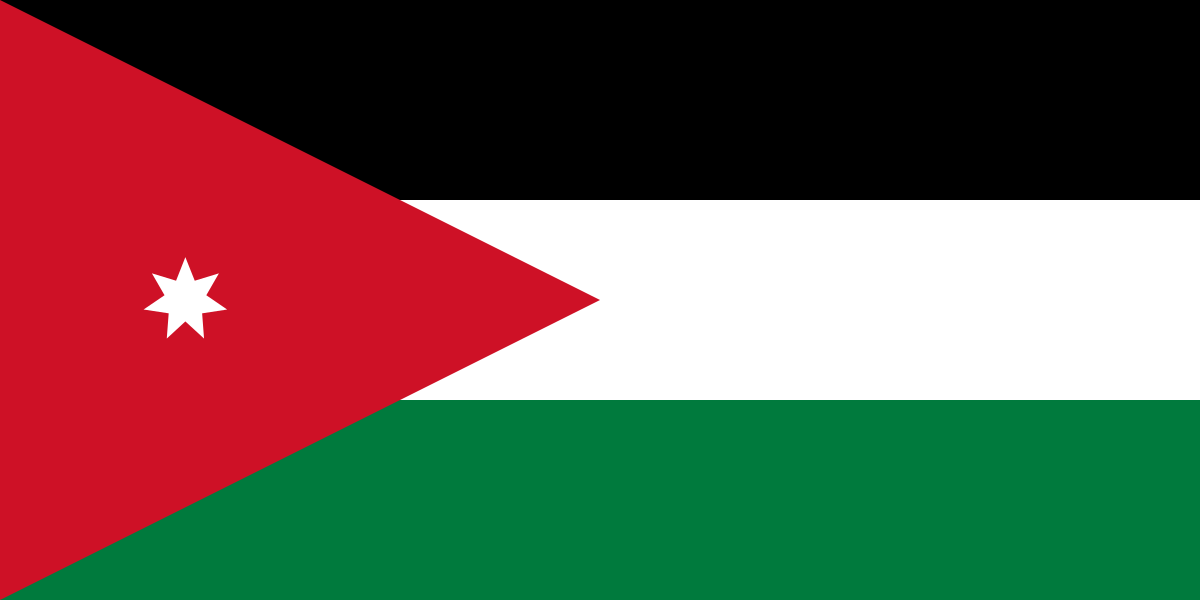 Jordan
Find best meeting timeAmman is already loaded in the meeting planner.
12hr|24hr

10:04:20pm
Sunday, September 20, 2026
Amman • Asia/Amman
Location
Interactive map loads after hydration. Capital coordinates: 31.96°N, 35.95°E.
Compare Times Live
The interactive time comparison grid loads in the live app. After the page hydrates you can add cities, drag rows, and share custom meeting windows.
HOME OF PETRADEAD SEA'S SALTIEST WATERANCIENT NABATEAN CULTUREWADI RUM'S DESERT LANDSCAPESJORDAN VALLEY'S FERTILE SOILUNESCO WORLD HERITAGE SITESHOSPITALITY OF BEDOUINSMULTILINGUAL SOCIETYJORDANIAN OLIVE OIL EXPORTSMOSAICS OF MADABABIRTHPLACE OF JESUS' BAPTISMAL-KHAZNEH TREASURYJORDAN RIVER'S HISTORICAL SIGNIFICANCEDIVERSE ETHNIC HERITAGETRADITIONAL DABKE DANCEHOME OF PETRADEAD SEA'S SALTIEST WATERANCIENT NABATEAN CULTUREWADI RUM'S DESERT LANDSCAPESJORDAN VALLEY'S FERTILE SOILUNESCO WORLD HERITAGE SITESHOSPITALITY OF BEDOUINSMULTILINGUAL SOCIETYJORDANIAN OLIVE OIL EXPORTSMOSAICS OF MADABABIRTHPLACE OF JESUS' BAPTISMAL-KHAZNEH TREASURYJORDAN RIVER'S HISTORICAL SIGNIFICANCEDIVERSE ETHNIC HERITAGETRADITIONAL DABKE DANCEHOME OF PETRADEAD SEA'S SALTIEST WATERANCIENT NABATEAN CULTUREWADI RUM'S DESERT LANDSCAPESJORDAN VALLEY'S FERTILE SOILUNESCO WORLD HERITAGE SITESHOSPITALITY OF BEDOUINSMULTILINGUAL SOCIETYJORDANIAN OLIVE OIL EXPORTSMOSAICS OF MADABABIRTHPLACE OF JESUS' BAPTISMAL-KHAZNEH TREASURYJORDAN RIVER'S HISTORICAL SIGNIFICANCEDIVERSE ETHNIC HERITAGETRADITIONAL DABKE DANCE
Country Information
Capital
AmmanPopulation
4,409,508
Area
89,342 km²
Largest City
AmmanDaylight Saving Time (DST)
Not Observed
ISO Code
JO / JOR
Time Zones
1 zone
Languages
Arabic
Currency
Jordanian Dinar (د.ا) - د.ا100
Coordinates
Decimal:31.9552, 35.9450
DMS:31°57′19″N, 35°56′42″E
Elevation
Highest:1,854 m
Lowest:-420 m
Average:717 m
International Dialing Code
+962
Time Zones
• Asia/Amman| EET (UTC+3)
About Jordan
•Jordan is home to the ancient city of Petra, a UNESCO World Heritage Site famous for its rock-cut architecture and water conduit system.
•The Jordan River holds significant religious importance as it is believed to be the site of the baptism of Jesus Christ.
•The country has a rich Bedouin heritage, with traditional practices that include music, poetry, and storytelling.
•Jordan has been a key player in Middle Eastern diplomacy and has signed peace treaties with both Israel and Palestine.
•The Hashemite Kingdom of Jordan was established in 1921 and has been ruled by the Hashemite family since its inception.
•Arabic is the official language of Jordan, and English is widely spoken, especially in business and education.
•The country is known for its hospitality, with the tradition of welcoming guests with coffee and sweets being a cherished practice.
•Jordan's economy is diverse, with sectors such as tourism, agriculture, and mining contributing significantly to its GDP.
•The Dead Sea, located on the border of Jordan, is one of the saltiest bodies of water in the world and is famous for its therapeutic properties.
•Jordanian cuisine features dishes such as mansaf, a traditional lamb dish served with rice and yogurt, which is considered the national dish.
•Wadi Rum, also known as the Valley of the Moon, is a protected desert wilderness known for its stunning rock formations and unique landscapes.
•The country has a significant archaeological heritage, with sites such as Jerash showcasing well-preserved Roman ruins.
•Jordan is a melting pot of cultures, influenced by the various civilizations that have passed through the region, including the Nabateans, Romans, and Ottomans.
•The Jordanian flag features a seven-pointed star that symbolizes the seven verses of the first surah of the Quran.
Cities in Jordan
Showing 10 cities (top 50 by population + business hubs). Click any city to view detailed time information.
Cities by Population
Popular Cities in Jordan
Related Pages
findtime.io
Popular Cities
v4.0.0-426-g7af737168-4942-7af7371
