
New: booking links. Let people book you in their own time zone.
Current Local Time in 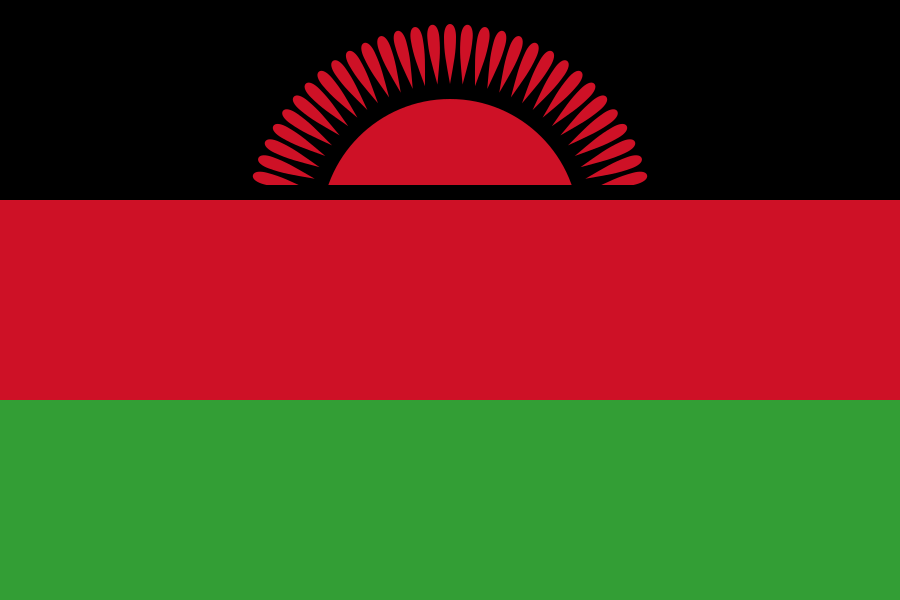 Malawi
Find best meeting timeLilongwe is already loaded in the meeting planner.
12hr|24hr

04:49:42pm
Sunday, October 25, 2026
Lilongwe • Africa/Blantyre
Location
Interactive map loads after hydration. Capital coordinates: -13.97°N, 33.79°E.
Compare Times Live
The interactive time comparison grid loads in the live app. After the page hydrates you can add cities, drag rows, and share custom meeting windows.
LAKE MALAWI: AFRICA'S THIRD LARGEST LAKEHOME TO OVER 1,000 FISH SPECIESMALAWI'S NATIONAL DISH: NSIMACHIKWAWA'S HISTORIC KACHINDAMO CHURCHMALAWI'S UNIQUE NYAU CULTURELILONGWE'S KUMBALI CULTURAL VILLAGEFAMOUS FOR MALAWI KITE FESTIVALMALAWI'S COTTON & TOBACCO EXPORTSMALAWI'S FIRST PRESIDENT: HASTINGS BANDAGREAT RIFT VALLEY RUNS THROUGH MALAWITRADITIONAL MALAWIAN DANCE: GULE WAMKULUMALAWI LITERARY FESTIVAL CELEBRATES WRITERSUNIQUE MANGO TREE TRADITIONMAKOKOLA BEACH: TOURIST HOTSPOTMALAWIAN HANDICRAFTS: BASKETS & POTTERYLAKE MALAWI: AFRICA'S THIRD LARGEST LAKEHOME TO OVER 1,000 FISH SPECIESMALAWI'S NATIONAL DISH: NSIMACHIKWAWA'S HISTORIC KACHINDAMO CHURCHMALAWI'S UNIQUE NYAU CULTURELILONGWE'S KUMBALI CULTURAL VILLAGEFAMOUS FOR MALAWI KITE FESTIVALMALAWI'S COTTON & TOBACCO EXPORTSMALAWI'S FIRST PRESIDENT: HASTINGS BANDAGREAT RIFT VALLEY RUNS THROUGH MALAWITRADITIONAL MALAWIAN DANCE: GULE WAMKULUMALAWI LITERARY FESTIVAL CELEBRATES WRITERSUNIQUE MANGO TREE TRADITIONMAKOKOLA BEACH: TOURIST HOTSPOTMALAWIAN HANDICRAFTS: BASKETS & POTTERYLAKE MALAWI: AFRICA'S THIRD LARGEST LAKEHOME TO OVER 1,000 FISH SPECIESMALAWI'S NATIONAL DISH: NSIMACHIKWAWA'S HISTORIC KACHINDAMO CHURCHMALAWI'S UNIQUE NYAU CULTURELILONGWE'S KUMBALI CULTURAL VILLAGEFAMOUS FOR MALAWI KITE FESTIVALMALAWI'S COTTON & TOBACCO EXPORTSMALAWI'S FIRST PRESIDENT: HASTINGS BANDAGREAT RIFT VALLEY RUNS THROUGH MALAWITRADITIONAL MALAWIAN DANCE: GULE WAMKULUMALAWI LITERARY FESTIVAL CELEBRATES WRITERSUNIQUE MANGO TREE TRADITIONMAKOKOLA BEACH: TOURIST HOTSPOTMALAWIAN HANDICRAFTS: BASKETS & POTTERY
Country Information
Capital
LilongwePopulation
2,582,383
Area
118,484 km²
Largest City
LilongweDaylight Saving Time (DST)
Not Observed
ISO Code
MW / MWI
Time Zones
1 zone
Languages
English, Chichewa
Currency
Malawian Kwacha (MK) - MK100
Coordinates
Decimal:-13.9669, 33.7873
DMS:13°58′01″S, 33°47′14″E
Elevation
Highest:3,002 m
Lowest:37 m
Average:1,520 m
International Dialing Code
+265
Time Zones
• Africa/Blantyre| CAT (UTC+2)
About Malawi
•Malawi is known as the 'Warm Heart of Africa' due to its friendly people and welcoming culture.
•Lake Malawi, one of the largest lakes in Africa, is home to numerous unique fish species and is a UNESCO World Heritage Site.
•The country has a rich tradition of music and dance, with popular styles including Malawian folk music and the vibrant 'Chimango' dance.
•Malawi gained independence from British colonial rule on July 6, 1964, becoming a republic in 1966.
•The Malawian flag features three horizontal stripes of black, red, and green, symbolizing the people, struggle for independence, and the land, respectively.
•Traditional Malawian cuisine often includes nsima, a staple made from maize flour, served with various relishes.
•The Chewa people, one of the largest ethnic groups in Malawi, are known for their unique Gule Wamkulu dance, which is performed during important ceremonies.
•Malawi has a diverse ecosystem, including national parks such as Liwonde National Park, which is known for its wildlife, including elephants and hippos.
•The country has made significant strides in education, with a focus on gender equality and increasing access to schooling for girls.
•Malawi is predominantly Christian, with a significant portion of the population adhering to various denominations, alongside traditional African religions.
•The country is known for its vibrant craftwork, including handwoven baskets, pottery, and wood carvings, which are popular among tourists.
•Malawi's economy is heavily based on agriculture, with tobacco being one of the main cash crops that contribute to exports.
•Zomba Plateau, a popular tourist destination, offers stunning views and hiking opportunities, showcasing Malawi's natural beauty.
•The country celebrates several cultural festivals, including the Nyau Festival, which showcases traditional dances and performances.
•Malawi has a history of resilience, as it has faced various challenges, including economic difficulties and health crises, while striving for development.
Cities in Malawi
Showing 10 cities (top 50 by population + business hubs). Click any city to view detailed time information.
Cities by Population
Related Pages
findtime.io
Popular Cities
v4.6-28-g4f8901461-6476-4f89014
