
findtime.io
4:11:58pm
Annular Solar Eclipse peak· 155d 16h 47m 02s

🌅The sun will rise at 6:01 AM
🌇The sun will set at 6:12 PM
☀️Sun will be up for 12h 11m today
Current Local Time in 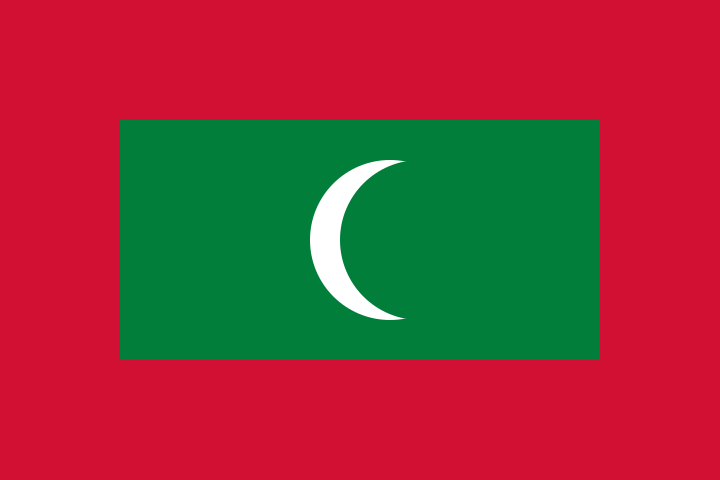 Maldives
Find best meeting timeWant the best time to meet in Male? It's already loaded.
12hr|24hr
04:11:57am
Friday, September 4, 2026
Male • Indian/Maldives
Location
Interactive map loads after hydration. Capital coordinates: 4.18°N, 73.51°E.
Compare Times Live
The interactive time comparison grid loads in the live app. After the page hydrates you can add cities, drag rows, and share custom meeting windows.
FLOATING VILLAGESUNIQUE ATOLL GEOGRAPHYTRADITIONAL DHONI BOATSISLAND HOPPING CULTUREMALDIVIAN CURRY SPICESVIVID CORAL REEFSSUSTAINABLE FISHING TRADITIONBODU BERU DRUMMINGISLAMIC REPUBLIC SINCE 1968MAAFUSHI LOCAL CAFE SCENETUNA FISHING ECONOMYSEAWATER BUNGALOWSMALDIVIAN LANGUAGE: DHIVEHIUNESCO BIOSPHERE RESERVESNATIONAL DISH: FISH CURRYFLOATING VILLAGESUNIQUE ATOLL GEOGRAPHYTRADITIONAL DHONI BOATSISLAND HOPPING CULTUREMALDIVIAN CURRY SPICESVIVID CORAL REEFSSUSTAINABLE FISHING TRADITIONBODU BERU DRUMMINGISLAMIC REPUBLIC SINCE 1968MAAFUSHI LOCAL CAFE SCENETUNA FISHING ECONOMYSEAWATER BUNGALOWSMALDIVIAN LANGUAGE: DHIVEHIUNESCO BIOSPHERE RESERVESNATIONAL DISH: FISH CURRYFLOATING VILLAGESUNIQUE ATOLL GEOGRAPHYTRADITIONAL DHONI BOATSISLAND HOPPING CULTUREMALDIVIAN CURRY SPICESVIVID CORAL REEFSSUSTAINABLE FISHING TRADITIONBODU BERU DRUMMINGISLAMIC REPUBLIC SINCE 1968MAAFUSHI LOCAL CAFE SCENETUNA FISHING ECONOMYSEAWATER BUNGALOWSMALDIVIAN LANGUAGE: DHIVEHIUNESCO BIOSPHERE RESERVESNATIONAL DISH: FISH CURRY
Country Information
Capital
MalePopulation
103,693
Area
298 km²
Largest City
MaleDaylight Saving Time (DST)
Not Observed
ISO Code
MV / MDV
Time Zones
1 zone
Languages
Dhivehi
Currency
Maldivian Rufiyaa (Rf) - Rf100
Coordinates
Decimal:4.1755, 73.5093
DMS:4°10′32″N, 73°30′33″E
Elevation
Highest:5 m
Lowest:0 m
Average:3 m
International Dialing Code
+960
Time Zones
• Indian/Maldives| MVT (UTC+5)
About Maldives
•The Maldives is an archipelago consisting of 26 atolls in the Indian Ocean, known for its stunning coral reefs and marine biodiversity.
•The Maldivian culture is heavily influenced by Indian, Arab, and African traditions, which is reflected in its music, dance, and art.
•Dhivehi is the official language of the Maldives, which is derived from the Indo-Aryan languages.
•Islam is the predominant religion in the Maldives, with the vast majority of the population being Sunni Muslims.
•The Maldives has a rich history of trade, having been a significant trading post between the Middle East, Africa, and Asia for centuries.
•Traditional Maldivian food includes dishes like mas huni, made from tuna, coconut, onion, and chili, often enjoyed at breakfast.
•The Maldives is famous for its luxury resorts, many of which are built on private islands and offer unique underwater dining experiences.
•Bodu Beru is a traditional form of music and dance in the Maldives, characterized by its rhythmic drumming and energetic performances.
•The Maldives has been recognized for its efforts in environmental conservation, particularly in protecting its coral reefs and marine life.
•One of the notable landmarks in the Maldives is the Old Friday Mosque, made of coral stone and featuring intricate carvings.
•The Maldivian economy relies heavily on tourism, which accounts for a significant portion of the country's GDP and employment.
•The country's unique geography, with its low-lying islands, makes it particularly vulnerable to the impacts of climate change and rising sea levels.
•The Maldives celebrates a unique cultural event known as Eid al-Fitr, marking the end of Ramadan with feasting and community gatherings.
•In recent years, the Maldives has taken significant steps toward promoting sustainable tourism to protect its fragile ecosystems.
•The country is also known for its traditional wooden dhoni boats, which have been used for fishing and transportation for centuries.
Cities in Maldives
Showing 10 cities (top 50 by population + business hubs). Click any city to view detailed time information.
Cities by Population
Popular Cities in Maldives
Related Pages
findtime.io
Popular Cities
v4.0.0-118-g8c5a8b6b8-4634-8c5a8b6