
findtime.io
3:44:04pm
Total Solar Eclipse· 22d 19h 1m 56s

🌅The sun will rise at 6:45 AM
🌇The sun will set at 5:49 PM
☀️Sun will be up for 11h 4m today
12hr|24hr
02:44:04am
Tuesday, July 21, 2026
Port Louis • Indian/Mauritius
Location
Interactive map loads after hydration. Capital coordinates: -20.16°N, 57.50°E.
Compare Times Live
The interactive time comparison grid loads in the live app. After the page hydrates you can add cities, drag rows, and share custom meeting windows.
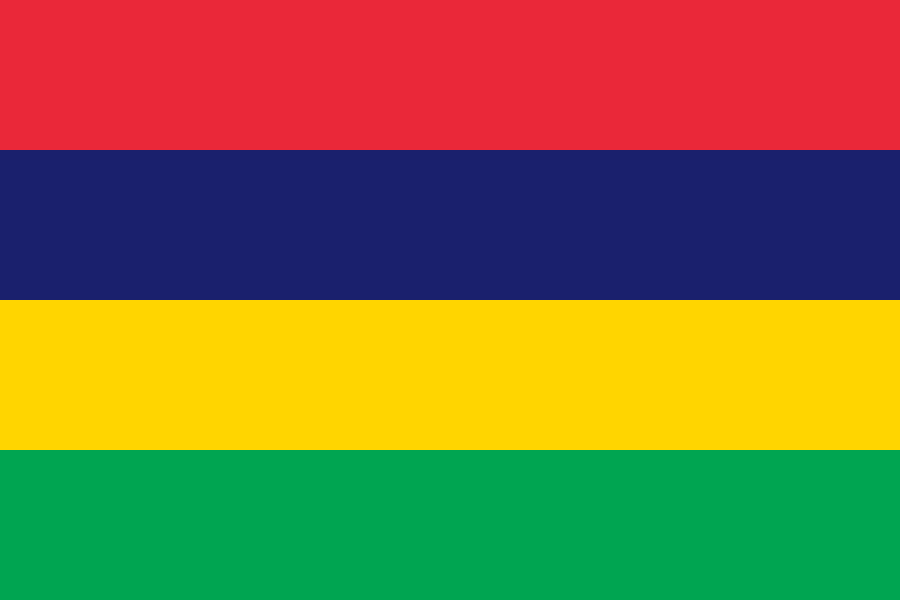
DODO BIRD EXTINCTIONUNIQUE CREOLE LANGUAGESEVEN COLORED EARTHSCULTURAL MELTING POTLARGEST SUGAR EXPORTERMAURITIUS FLAG WITH 4 STRIPESPORT LOUIS MARKET VIBRANCYCHAMAREL WATERFALLS BEAUTYST. AUBIN SUGAR PLANTATIONUNESCO WORLD HERITAGE SITESCAVE OF THE LIONBOIS CHERI TEA PLANTATIONMAURITIAN SEGA DANCEHINDU FESTIVAL OF THAIPOOSAMFAMOUS FOR ROMALPA INDIAN OCEANDODO BIRD EXTINCTIONUNIQUE CREOLE LANGUAGESEVEN COLORED EARTHSCULTURAL MELTING POTLARGEST SUGAR EXPORTERMAURITIUS FLAG WITH 4 STRIPESPORT LOUIS MARKET VIBRANCYCHAMAREL WATERFALLS BEAUTYST. AUBIN SUGAR PLANTATIONUNESCO WORLD HERITAGE SITESCAVE OF THE LIONBOIS CHERI TEA PLANTATIONMAURITIAN SEGA DANCEHINDU FESTIVAL OF THAIPOOSAMFAMOUS FOR ROMALPA INDIAN OCEANDODO BIRD EXTINCTIONUNIQUE CREOLE LANGUAGESEVEN COLORED EARTHSCULTURAL MELTING POTLARGEST SUGAR EXPORTERMAURITIUS FLAG WITH 4 STRIPESPORT LOUIS MARKET VIBRANCYCHAMAREL WATERFALLS BEAUTYST. AUBIN SUGAR PLANTATIONUNESCO WORLD HERITAGE SITESCAVE OF THE LIONBOIS CHERI TEA PLANTATIONMAURITIAN SEGA DANCEHINDU FESTIVAL OF THAIPOOSAMFAMOUS FOR ROMALPA INDIAN OCEAN
Country Information
Capital
Port LouisPopulation
537,796
Area
2,040 km²
Largest City
Port LouisDaylight Saving Time (DST)
Not Observed
ISO Code
MU / MUS
Time Zones
1 zone
Languages
English, French
Currency
Mauritian Rupee (₨) - ₨100
Coordinates
Decimal:-20.1619, 57.4989
DMS:20°09′43″S, 57°29′56″E
Elevation
Highest:828 m
Lowest:0 m
Average:414 m
International Dialing Code
+230
Time Zones
• Indian/Mauritius| MUT (UTC+4)
Geographic Extremes
About Mauritius
•Mauritius was uninhabited until the Dutch arrived in the 16th century, followed by the French in the 18th century and the British in the 19th century.
•The island is known for its unique biodiversity, including species such as the dodo bird, which was native to Mauritius but became extinct in the late 17th century.
•Mauritian culture is a rich blend of influences from Africa, Asia, Europe, and the islands' indigenous populations, creating a diverse and vibrant society.
•The official language of Mauritius is English, but French is widely spoken, and Creole is commonly used in everyday conversation.
•Hinduism is the most widely practiced religion in Mauritius, followed by Christianity, Islam, and Buddhism, reflecting the country's multicultural heritage.
•The annual Maha Shivaratri festival attracts thousands of devotees who make a pilgrimage to the sacred lake of Grand Bassin.
•The country is renowned for its stunning beaches and lagoons, with the southern coast featuring dramatic cliffs and the northern coast boasting tranquil, picturesque shores.
•Mauritius is home to several UNESCO World Heritage Sites, including the Aapravasi Ghat, a historic immigration depot that played a significant role in the country's labor history.
•The economy of Mauritius has transitioned from a sugarcane-based economy to one that includes textiles, tourism, and financial services, showcasing its adaptability.
•The island is characterized by its volcanic landscape, with the Black River Gorges National Park offering lush forests, hiking trails, and diverse wildlife.
•Mauritius is recognized for its political stability and is often cited as a model of democracy in Africa, with regular free and fair elections.
•The Sega is a traditional dance and music genre unique to Mauritius, often performed at celebrations and cultural festivals, reflecting the island's heritage.
•The country has made significant strides in education, achieving high literacy rates and offering free education from primary to tertiary levels.
•Mauritius is famous for its sugar production, which has been a cornerstone of its economy since the early colonial period.
Cities in Mauritius
Showing 10 cities (top 50 by population + business hubs). Click any city to view detailed time information.
Cities by Population
Popular Cities in Mauritius
Related Pages
Popular Cities
v3.9.0-105-gf9fbc09b2-4317-f9fbc09