
findtime.io
10:54:10am
New: booking links. Let people book you in their own time zone.
Current Local Time in 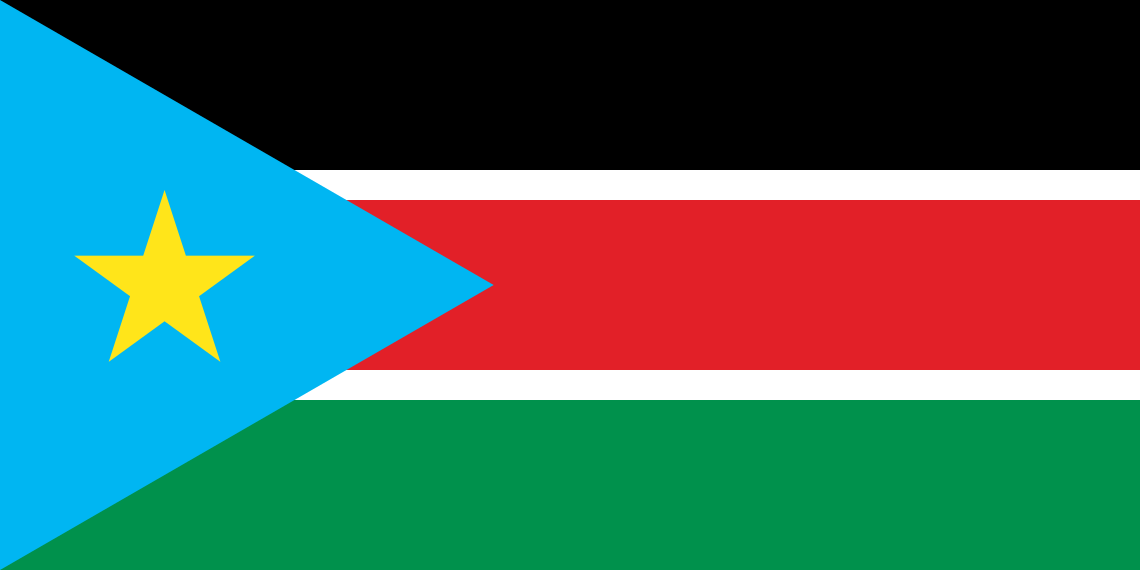 South Sudan
Find best meeting timeJuba is already loaded in the meeting planner.
12hr|24hr

07:54:10pm
Wednesday, October 7, 2026
Juba • Africa/Juba
Location
Interactive map loads after hydration. Capital coordinates: 4.85°N, 31.58°E.
Compare Times Live
The interactive time comparison grid loads in the live app. After the page hydrates you can add cities, drag rows, and share custom meeting windows.
NILE RIVER'S SOURCEDINKA CATTLE CULTURETRADITIONAL JENGA GAMEBANTU LANGUAGE FAMILYSOUTH SUDAN INDEPENDENCE DAYJUBA MARKET VIBRANCYRUMBEK'S STONE CHURCHESSUDAN'S LONGEST WARLOKCHOR GETS FROSTSOUTH SUDAN FLAG SYMBOLISMUNIQUE BASKET WEAVING ARTNATIONAL ANIMAL: WHITE-EARED KOBSUDD SWAMP BIODIVERSITYCULTURAL DANCE FESTIVALSMISSIONARY LEGACY IN EDUCATIONNILE RIVER'S SOURCEDINKA CATTLE CULTURETRADITIONAL JENGA GAMEBANTU LANGUAGE FAMILYSOUTH SUDAN INDEPENDENCE DAYJUBA MARKET VIBRANCYRUMBEK'S STONE CHURCHESSUDAN'S LONGEST WARLOKCHOR GETS FROSTSOUTH SUDAN FLAG SYMBOLISMUNIQUE BASKET WEAVING ARTNATIONAL ANIMAL: WHITE-EARED KOBSUDD SWAMP BIODIVERSITYCULTURAL DANCE FESTIVALSMISSIONARY LEGACY IN EDUCATIONNILE RIVER'S SOURCEDINKA CATTLE CULTURETRADITIONAL JENGA GAMEBANTU LANGUAGE FAMILYSOUTH SUDAN INDEPENDENCE DAYJUBA MARKET VIBRANCYRUMBEK'S STONE CHURCHESSUDAN'S LONGEST WARLOKCHOR GETS FROSTSOUTH SUDAN FLAG SYMBOLISMUNIQUE BASKET WEAVING ARTNATIONAL ANIMAL: WHITE-EARED KOBSUDD SWAMP BIODIVERSITYCULTURAL DANCE FESTIVALSMISSIONARY LEGACY IN EDUCATION
Country Information
Capital
JubaPopulation
1,376,869
Area
619,745 km²
Largest City
JubaDaylight Saving Time (DST)
Not Observed
ISO Code
SS / SSD
Time Zones
1 zone
Languages
English
Currency
South Sudanese Pound (£) - £100
Coordinates
Decimal:4.8517, 31.5825
DMS:4°51′06″N, 31°34′57″E
Elevation
Highest:3,187 m
Lowest:381 m
Average:1,784 m
International Dialing Code
+211
Time Zones
• Africa/Juba| EAT (UTC+2)
About South Sudan
•South Sudan gained its independence from Sudan on July 9, 2011, becoming the world's youngest country.
•The country has a rich cultural heritage, with over 60 different ethnic groups, each with its own unique traditions and languages.
•The Nuer and Dinka are among the largest ethnic groups in South Sudan, and they have distinct cultural practices and traditional customs.
•The Nile River, one of the longest rivers in the world, flows through South Sudan, providing a vital resource for agriculture and transportation.
•Traditional music and dance play a significant role in South Sudanese culture, often used in ceremonies and celebrations.
•The country is home to various wildlife and natural reserves, including the Boma National Park, which is known for its rich biodiversity.
•South Sudan's economy is heavily reliant on oil exports, which account for the majority of the government's revenue.
•The predominant religion in South Sudan is Christianity, which was introduced during the colonial period and has since become integral to the country's identity.
•In addition to English, which is the official language, numerous indigenous languages are spoken throughout the country, reflecting its ethnic diversity.
•Traditional crafts, such as beadwork and pottery, are important aspects of South Sudanese culture and are often passed down through generations.
•The country has faced significant challenges, including civil conflict and humanitarian crises, which have impacted its development and stability.
•South Sudan is known for its rich oral traditions, with storytelling being a vital means of passing down history and cultural values.
•The Jonglei Canal, constructed in the 1980s, was intended to divert the Nile's waters but has been controversial due to its environmental impact.
•The country celebrates various cultural festivals that showcase traditional dances, music, and art, reflecting the diversity of its peoples.
Cities in South Sudan
Showing 10 cities (top 50 by population + business hubs). Click any city to view detailed time information.
Cities by Population
Related Pages
findtime.io
Popular Cities
v4.5-434-gde03e3eee-5803-de03e3e
