
New: booking links. Let people book you in their own time zone.
Current Local Time in 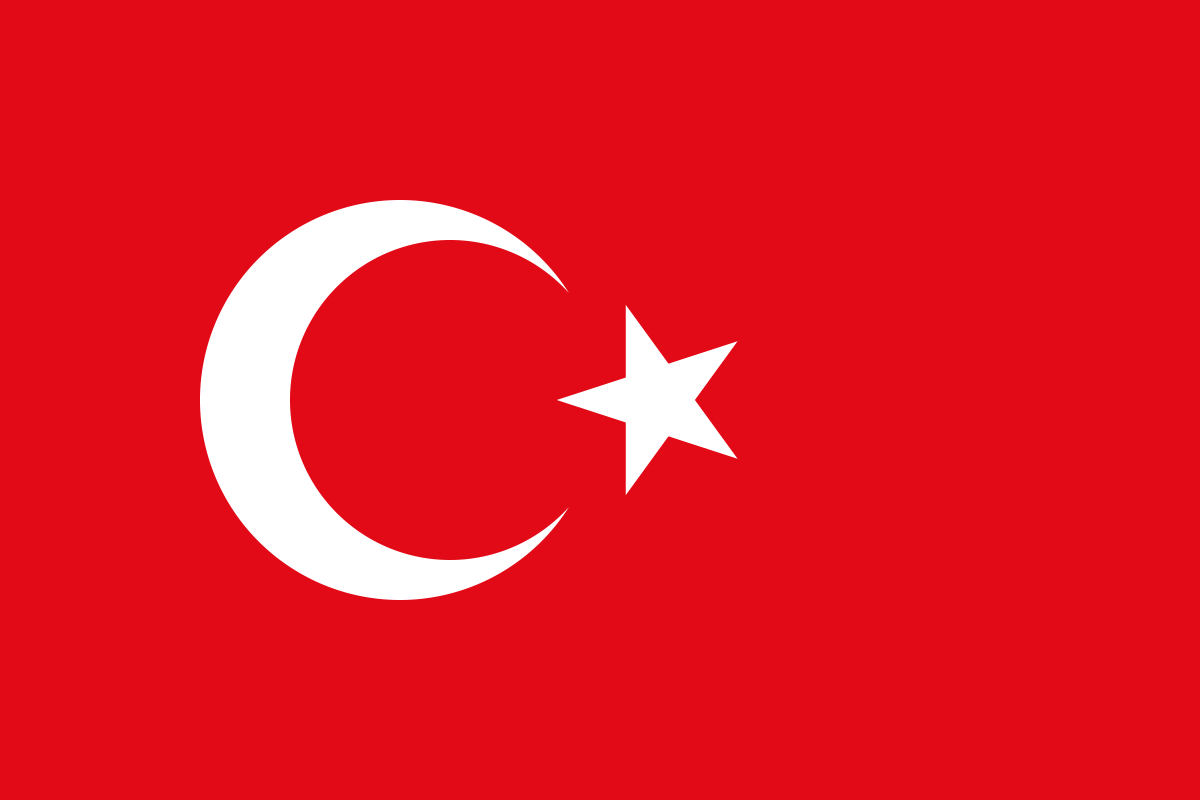 Turkey
Find best meeting timeAnkara is already loaded in the meeting planner.
12hr|24hr

07:24:59pm
Tuesday, October 20, 2026
Ankara • Europe/Istanbul
Location
Interactive map loads after hydration. Capital coordinates: 39.92°N, 32.85°E.
Compare Times Live
The interactive time comparison grid loads in the live app. After the page hydrates you can add cities, drag rows, and share custom meeting windows.
HOME OF THE HAGIA SOPHIACAPPADOCIA'S FAIRY CHIMNEYSFIRST COFFEE HOUSE IN THE WORLDBIRTHPLACE OF SAINT NICHOLASUNESCO'S GÖREME NATIONAL PARKTURKISH DELIGHT ORIGINATED HEREANATOLIAN TIGER IN ECONOMYBOSPHORUS STRAIT DIVIDES CONTINENTSTRADITIONAL WHIRLING DERVISHESKEBAB VARIETIES GALOREFAMOUS FOR SULTANAHMET MOSQUETURKISH LANGUAGE'S UNIQUE ALPHABETPAMUKKALE'S HEAVENLY TRAVERTINESTURKISH BATHS - HAMAM EXPERIENCERUMELI HISARI FORTRESS ON BOSPHORUSHOME OF THE HAGIA SOPHIACAPPADOCIA'S FAIRY CHIMNEYSFIRST COFFEE HOUSE IN THE WORLDBIRTHPLACE OF SAINT NICHOLASUNESCO'S GÖREME NATIONAL PARKTURKISH DELIGHT ORIGINATED HEREANATOLIAN TIGER IN ECONOMYBOSPHORUS STRAIT DIVIDES CONTINENTSTRADITIONAL WHIRLING DERVISHESKEBAB VARIETIES GALOREFAMOUS FOR SULTANAHMET MOSQUETURKISH LANGUAGE'S UNIQUE ALPHABETPAMUKKALE'S HEAVENLY TRAVERTINESTURKISH BATHS - HAMAM EXPERIENCERUMELI HISARI FORTRESS ON BOSPHORUSHOME OF THE HAGIA SOPHIACAPPADOCIA'S FAIRY CHIMNEYSFIRST COFFEE HOUSE IN THE WORLDBIRTHPLACE OF SAINT NICHOLASUNESCO'S GÖREME NATIONAL PARKTURKISH DELIGHT ORIGINATED HEREANATOLIAN TIGER IN ECONOMYBOSPHORUS STRAIT DIVIDES CONTINENTSTRADITIONAL WHIRLING DERVISHESKEBAB VARIETIES GALOREFAMOUS FOR SULTANAHMET MOSQUETURKISH LANGUAGE'S UNIQUE ALPHABETPAMUKKALE'S HEAVENLY TRAVERTINESTURKISH BATHS - HAMAM EXPERIENCERUMELI HISARI FORTRESS ON BOSPHORUS
Country Information
Capital
AnkaraPopulation
63,524,862
Area
783,562 km²
Largest City
IstanbulDaylight Saving Time (DST)
Not Observed
ISO Code
TR / TUR
Time Zones
1 zone
Languages
Turkish
Currency
Turkish Lira (₺) - ₺100
Coordinates
Decimal:39.9199, 32.8543
DMS:39°55′12″N, 32°51′15″E
Elevation
Highest:5,137 m
Lowest:0 m
Average:2,569 m
International Dialing Code
+90
Time Zones
• Europe/Istanbul| GMT+3 (UTC+3)
About Turkey
•Türkiye is home to the ancient city of Troy, which is known for its significant role in Greek mythology and the Trojan War.
•The Hagia Sophia in Istanbul, originally a cathedral, later a mosque, and now a museum, showcases a blend of Byzantine and Ottoman architecture.
•The Whirling Dervishes, a Sufi practice originating from Türkiye, perform a spinning dance as a form of meditation and spiritual expression.
•The country's diverse landscape includes the stunning rock formations of Cappadocia, which are renowned for their unique fairy chimneys and cave dwellings.
•Türkiye has a rich culinary heritage, with dishes like kebabs, baklava, and meze reflecting its diverse cultural influences.
•The Bosphorus Strait, which separates Europe and Asia, is a significant geographical feature that plays a crucial role in maritime trade.
•The ancient city of Ephesus, located in Türkiye, is one of the best-preserved Roman ruins and was once a major trading hub.
•The Turkish language, a member of the Turkic language family, has undergone significant changes since the early 20th century with language reform initiatives.
•Türkiye is renowned for its traditional arts, including carpet weaving, ceramics, and calligraphy, which reflect its rich cultural heritage.
•The country has a predominantly Muslim population, and many traditional customs and festivals are influenced by Islamic practices.
•Mount Ararat, the highest peak in Türkiye, is traditionally considered the resting place of Noah's Ark according to biblical accounts.
•The Selimiye Mosque in Edirne, an example of Ottoman architecture, was designed by the famous architect Mimar Sinan and is a UNESCO World Heritage site.
•Türkiye's economy is diverse, with key sectors including agriculture, textiles, automotive, and tourism contributing significantly to its GDP.
•The annual oil wrestling tournament held in Edirne, known as Kirkpinar, is one of the oldest sports events in the world and reflects Turkey's unique cultural traditions.
Cities in Turkey
Showing 10 cities (top 50 by population + business hubs). Click any city to view detailed time information.
Cities by Population
Related Pages
findtime.io
Popular Cities
v4.5-947-g4ca53d1d4-6316-4ca53d1
