
New: booking links. Let people book you in their own time zone.
Current Local Time in 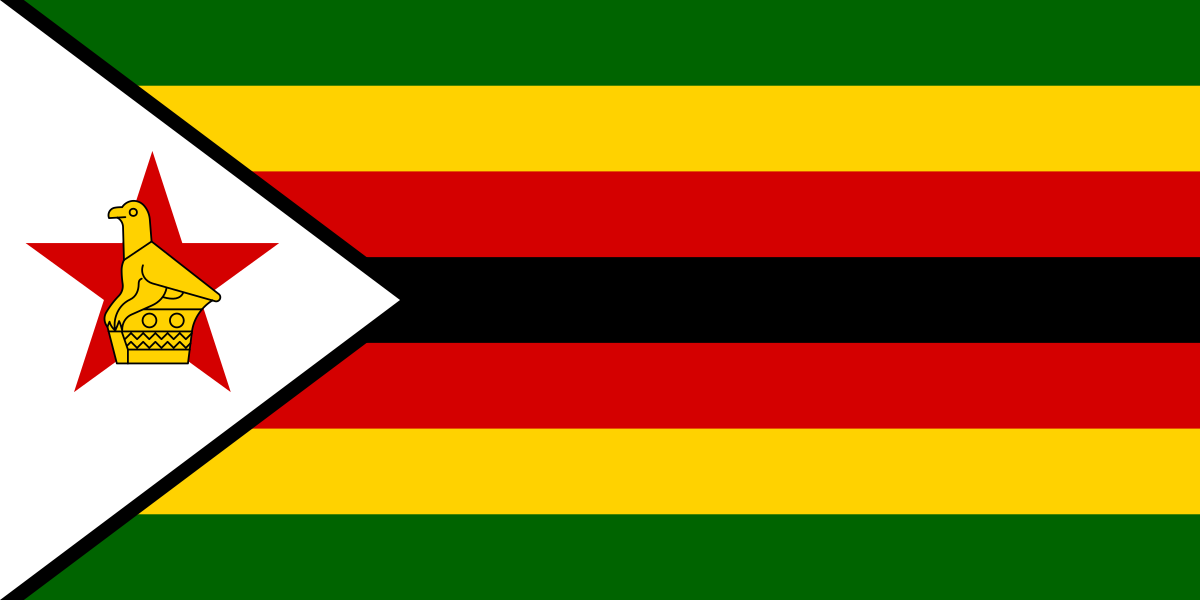 Zimbabwe
Find best meeting timeHarare is already loaded in the meeting planner.
12hr|24hr

04:50:19pm
Sunday, October 25, 2026
Harare • Africa/Harare
Location
Interactive map loads after hydration. Capital coordinates: -17.83°N, 31.05°E.
Compare Times Live
The interactive time comparison grid loads in the live app. After the page hydrates you can add cities, drag rows, and share custom meeting windows.
VICTORIA FALLS: WORLD'S LARGEST WATERFALLMATABELELAND CAVES: ANCIENT ROCK ARTZIMBABWE RUINS: UNESCO WORLD HERITAGE SITECHIBHARERWA: TRADITIONAL STORYTELLING ARTHWANGE NATIONAL PARK: ELEPHANT HAVENSHONA SCULPTURE: GLOBAL ART PHENOMENONMUSICAL INSTRUMENT: MBIRA (THUMB PIANO)BULAWAYO: HISTORIC RAILWAY HUBZIMBABWEAN DANCE: MABUKA TRADITIONGREAT ZIMBABWE: ANCIENT CITY RUINSNYAMINYAMI: RIVER GOD LEGENDZIMBABWEAN TEA: GROWN IN NESTLEWILDLIFE CONSERVATION: SUCCESSFUL PROGRAMSZIMBABWEAN CUISINE: SADZA & GAME MEATNATIONAL ANIMAL: SABLE ANTILOPEVICTORIA FALLS: WORLD'S LARGEST WATERFALLMATABELELAND CAVES: ANCIENT ROCK ARTZIMBABWE RUINS: UNESCO WORLD HERITAGE SITECHIBHARERWA: TRADITIONAL STORYTELLING ARTHWANGE NATIONAL PARK: ELEPHANT HAVENSHONA SCULPTURE: GLOBAL ART PHENOMENONMUSICAL INSTRUMENT: MBIRA (THUMB PIANO)BULAWAYO: HISTORIC RAILWAY HUBZIMBABWEAN DANCE: MABUKA TRADITIONGREAT ZIMBABWE: ANCIENT CITY RUINSNYAMINYAMI: RIVER GOD LEGENDZIMBABWEAN TEA: GROWN IN NESTLEWILDLIFE CONSERVATION: SUCCESSFUL PROGRAMSZIMBABWEAN CUISINE: SADZA & GAME MEATNATIONAL ANIMAL: SABLE ANTILOPEVICTORIA FALLS: WORLD'S LARGEST WATERFALLMATABELELAND CAVES: ANCIENT ROCK ARTZIMBABWE RUINS: UNESCO WORLD HERITAGE SITECHIBHARERWA: TRADITIONAL STORYTELLING ARTHWANGE NATIONAL PARK: ELEPHANT HAVENSHONA SCULPTURE: GLOBAL ART PHENOMENONMUSICAL INSTRUMENT: MBIRA (THUMB PIANO)BULAWAYO: HISTORIC RAILWAY HUBZIMBABWEAN DANCE: MABUKA TRADITIONGREAT ZIMBABWE: ANCIENT CITY RUINSNYAMINYAMI: RIVER GOD LEGENDZIMBABWEAN TEA: GROWN IN NESTLEWILDLIFE CONSERVATION: SUCCESSFUL PROGRAMSZIMBABWEAN CUISINE: SADZA & GAME MEATNATIONAL ANIMAL: SABLE ANTILOPE
Country Information
Capital
HararePopulation
4,019,128
Area
390,757 km²
Largest City
HarareDaylight Saving Time (DST)
Not Observed
ISO Code
ZW / ZWE
Time Zones
1 zone
Languages
English, Shona, Ndebele
Currency
Zimbabwean Dollar ($) - $100
Coordinates
Decimal:-17.8277, 31.0534
DMS:17°49′40″S, 31°03′12″E
Elevation
Highest:2,592 m
Lowest:162 m
Average:1,377 m
International Dialing Code
+263
Time Zones
• Africa/Harare| CAT (UTC+2)
Geographic Extremes
About Zimbabwe
•Zimbabwe is home to the Great Zimbabwe ruins, which are the largest ancient structures in Southern Africa and a UNESCO World Heritage Site.
•The country has a rich cultural heritage, influenced by diverse ethnic groups, primarily the Shona and Ndebele peoples.
•The Zimbabwean dollar was reintroduced in 2019 after a period of hyperinflation that led to the abandonment of its currency in 2009.
•Victoria Falls, located on the border between Zimbabwe and Zambia, is one of the largest and most famous waterfalls in the world.
•The traditional music of Zimbabwe features instruments like the mbira, a thumb piano that plays a central role in cultural ceremonies.
•The country has several national parks, including Hwange National Park, which is known for its large population of elephants.
•Zimbabwe's independence from British colonial rule was achieved in 1980 after a protracted liberation struggle.
•The country celebrates various cultural festivals, such as the Harare International Festival of the Arts, showcasing music, dance, and visual arts.
•Shona sculpture, characterized by its intricate carvings and use of stone, is recognized internationally and is a significant aspect of Zimbabwean art.
•English is the official language of Zimbabwe, but many indigenous languages, such as Shona and Sindebele, are widely spoken.
•The country's economy is largely based on agriculture, with tobacco, cotton, and maize being the major crops.
•Zimbabwe has a diverse range of wildlife, including the Big Five: lions, leopards, elephants, buffaloes, and rhinoceroses.
•The country is known for its rich tradition of storytelling and oral history, which plays a vital role in preserving cultural identity.
•The Zimbabwe Bird, a stone sculpture found at Great Zimbabwe, is a national symbol and represents the country's history and culture.
Cities in Zimbabwe
Showing 10 cities (top 50 by population + business hubs). Click any city to view detailed time information.
Cities by Population
Popular Cities in Zimbabwe
Related Pages
findtime.io
Popular Cities
v4.6-28-g4f8901461-6476-4f89014
