
findtime.io
3:44:19pm
Total Solar Eclipse· 22d 19h 1m 41s

🌅The sun will rise at 5:21 AM
🌇The sun will set at 7:01 PM
☀️Sun will be up for 13h 40m today
12hr|24hr
04:29:20am
Tuesday, July 21, 2026
Kathmandu • Asia/Kathmandu
Location
Interactive map loads after hydration. Capital coordinates: 27.70°N, 85.32°E.
Compare Times Live
The interactive time comparison grid loads in the live app. After the page hydrates you can add cities, drag rows, and share custom meeting windows.
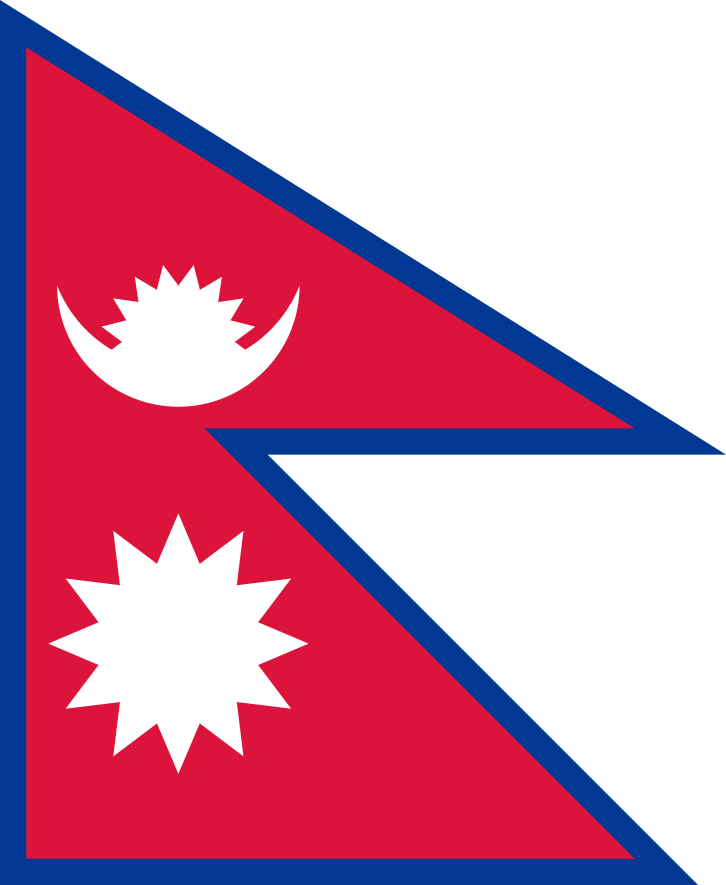
HOME OF MOUNT EVERESTBUDDHISM BIRTHPLACELIVING GODDESS CULTURENEPAL'S NATIONAL FLOWER: RHODODENDRONTWO FLAG SHAPES: PENNANT AND RECTANGLEHIMALAYAN GORGE: KARNALI RIVERUNIQUE NATION OF HINDUISMTRADITIONAL DANCE: DANDAR KALISWAYAMBHUNATH: MONKEY TEMPLENEPAL'S NATIONAL INSTRUMENT: MADALTRISHUL: THREE-PRONGED SWORDLANGUAGE DIVERSITY: OVER 120 LANGUAGESFAMOUS FOR THARU DANCERARA LAKE: NEPAL'S LARGEST LAKEGURKHA SOLDIERS' LEGENDARY BRAVERYHOME OF MOUNT EVERESTBUDDHISM BIRTHPLACELIVING GODDESS CULTURENEPAL'S NATIONAL FLOWER: RHODODENDRONTWO FLAG SHAPES: PENNANT AND RECTANGLEHIMALAYAN GORGE: KARNALI RIVERUNIQUE NATION OF HINDUISMTRADITIONAL DANCE: DANDAR KALISWAYAMBHUNATH: MONKEY TEMPLENEPAL'S NATIONAL INSTRUMENT: MADALTRISHUL: THREE-PRONGED SWORDLANGUAGE DIVERSITY: OVER 120 LANGUAGESFAMOUS FOR THARU DANCERARA LAKE: NEPAL'S LARGEST LAKEGURKHA SOLDIERS' LEGENDARY BRAVERYHOME OF MOUNT EVERESTBUDDHISM BIRTHPLACELIVING GODDESS CULTURENEPAL'S NATIONAL FLOWER: RHODODENDRONTWO FLAG SHAPES: PENNANT AND RECTANGLEHIMALAYAN GORGE: KARNALI RIVERUNIQUE NATION OF HINDUISMTRADITIONAL DANCE: DANDAR KALISWAYAMBHUNATH: MONKEY TEMPLENEPAL'S NATIONAL INSTRUMENT: MADALTRISHUL: THREE-PRONGED SWORDLANGUAGE DIVERSITY: OVER 120 LANGUAGESFAMOUS FOR THARU DANCERARA LAKE: NEPAL'S LARGEST LAKEGURKHA SOLDIERS' LEGENDARY BRAVERY
Country Information
Capital
KathmanduPopulation
5,162,517
Area
147,181 km²
Largest City
KathmanduDaylight Saving Time (DST)
Not Observed
ISO Code
NP / NPL
Time Zones
1 zone
Languages
Nepali
Currency
Nepalese Rupee (Rs) - Rs100
Coordinates
Decimal:27.7017, 85.3206
DMS:27°42′06″N, 85°19′14″E
Elevation
Highest:8,848 m
Lowest:70 m
Average:4,459 m
International Dialing Code
+977
Time Zones
• Asia/Kathmandu| NPT (UTC+5:45)
Geographic Extremes
About Nepal
•Nepal is home to the Himalayas, which include Mount Everest, the highest peak in the world.
•The country has a rich history that dates back thousands of years, with evidence of early human settlements and the presence of ancient civilizations.
•Nepal is known for its diverse culture, which includes a variety of ethnic groups, languages, and traditions.
•The majority of the population practices Hinduism, followed by Buddhism, which reflects the country's historical significance as a center for both religions.
•The Kathmandu Valley is recognized for its unique blend of Hindu and Buddhist architecture, showcasing numerous temples and stupas.
•The tradition of 'Namaste,' a respectful greeting, reflects the importance of hospitality in Nepali culture.
•Nepal was never colonized, maintaining its sovereignty throughout the colonial period in South Asia.
•The country celebrates various festivals, with Dashain and Tihar being among the most important Hindu celebrations.
•The unique practice of 'jatra' involves vibrant street festivals where deities are paraded through the streets, highlighting the community's devotion and cultural heritage.
•Nepal is renowned for its trekking routes, including the Annapurna Circuit and Langtang Valley, attracting adventure enthusiasts from around the world.
•The country has made significant contributions to art and literature, with traditional forms like thangka painting and folk music being prominent.
•Nepal's economy is largely based on agriculture, tourism, and remittances from citizens working abroad.
•The Terai region of Nepal is characterized by its fertile plains and is vital for the country's agricultural output.
•Gautama Buddha, the founder of Buddhism, was born in Lumbini, a UNESCO World Heritage Site located in Nepal.
•The unique practice of 'Mithila art' originates from the Mithila region of Nepal, known for its colorful and intricate paintings.
Cities in Nepal
Showing 10 cities (top 50 by population + business hubs). Click any city to view detailed time information.
Cities by Population
Related Pages
Popular Cities
v3.9.0-105-gf9fbc09b2-4317-f9fbc09